
Crispy Golden Potato Pancakes Recipe – Step-by-Step Guide
Introduction
Crispy golden potato pancakes are a delicious homemade comfort food with a crunchy outside and a soft, tender inside. They are made with simple kitchen ingredients, including potatoes, eggs, flour, salt, black pepper, and a little oil or butter for frying. When cooked properly, these pancakes develop a beautiful golden-brown crust that makes them irresistible.
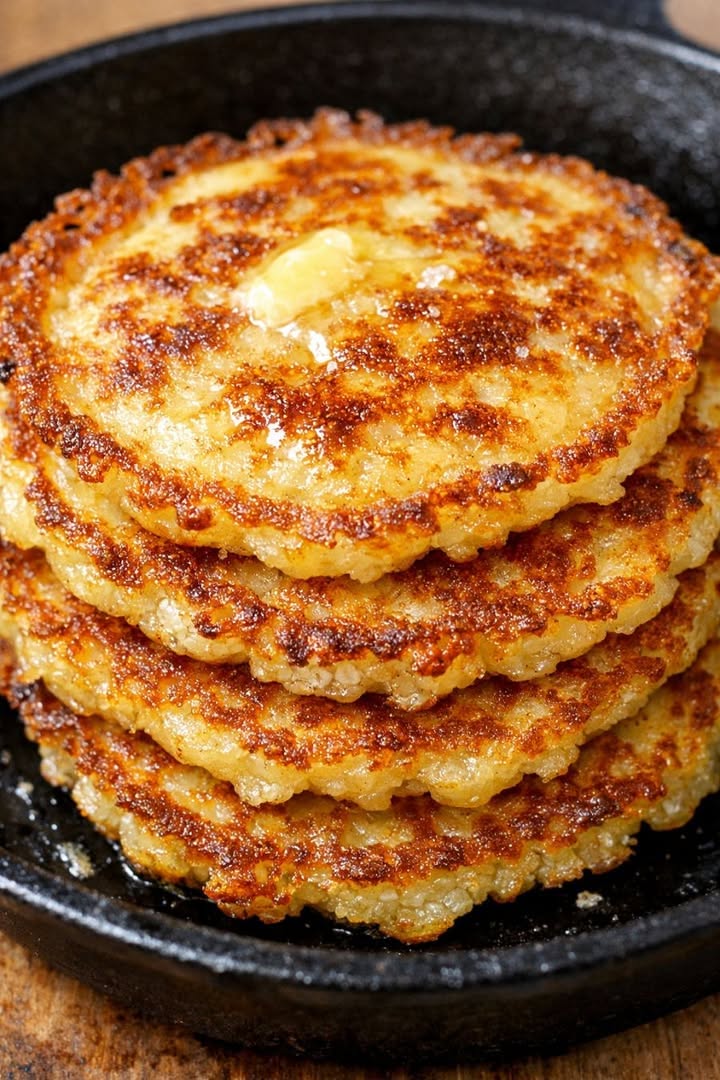
As shown in the picture, the pancakes are stacked while still warm, with a small piece of melting butter on top. They are perfect for breakfast, brunch, lunch, or even as a side dish for dinner. You can serve them with sour cream, yogurt, garlic sauce, ketchup, or your favorite homemade dip.
One of the best things about potato pancakes is that they do not require expensive ingredients or complicated cooking techniques. With a few simple steps, you can prepare a satisfying meal for your family. This recipe also allows you to adjust the seasonings according to your taste.
In this guide, you will learn how to prepare the potatoes, mix the batter, fry the pancakes, and achieve a crispy texture without making them greasy.
Preparation Time and Servings
Preparation time: 15 minutes
Cooking time: 20–25 minutes
Total time: Approximately 40 minutes
Servings: 4 people
Difficulty level: Easy
Cooking method: Pan-frying
Ingredients for Crispy Potato Pancakes
You will need the following ingredients to make approximately 8 medium-sized pancakes.
Potatoes: 4 medium potatoes, approximately 600 grams
Eggs: 2 large eggs
All-purpose flour: 3 tablespoons
Onion: 1 small onion, finely grated
Salt: 1 teaspoon, or according to taste
Black pepper: ½ teaspoon
Garlic powder: ¼ teaspoon, optional
Paprika: ¼ teaspoon, optional
Fresh parsley: 1 tablespoon, finely chopped, optional
Cooking oil: 3–4 tablespoons, as needed
Butter: 1 tablespoon for serving, optional
Sour cream or plain yogurt: For serving, optional
You can adjust the seasonings to suit your preferences. If you enjoy a little heat, add a small pinch of chili powder. For a more traditional flavor, keep the seasoning simple with salt, pepper, potatoes, and onion.
Step 1: Prepare the Potatoes
Start by washing the potatoes thoroughly under running water to remove dirt. Peel them using a vegetable peeler, then place them on a clean cutting board.
Grate the potatoes using the large holes of a box grater. You can also use a food processor with a grating attachment if you want to save time.
Place the grated potatoes in a clean kitchen towel or cheesecloth. Gather the edges and squeeze firmly over the sink to remove as much liquid as possible.
This step is very important because excess moisture can prevent the pancakes from becoming crispy. Wet potatoes may produce soft pancakes that break apart easily during cooking.
After squeezing, transfer the grated potatoes to a large mixing bowl.
Step 2: Grate the Onion
Peel the onion and grate it finely. Add it to the bowl containing the potatoes.
The onion adds a savory flavor and helps make the pancakes taste more delicious. Finely grated onion blends better with the potatoes than large pieces.
If you prefer a milder onion flavor, you can use half an onion instead of a whole one. You can also leave the onion out completely if you want the natural potato flavor to stand out.
If the onion releases a lot of liquid, drain the excess before mixing it with the potatoes.
Step 3: Add the Eggs and Seasonings
Crack the two eggs into a separate small bowl and beat them lightly with a fork.
Pour the beaten eggs over the grated potatoes and onion. Add the salt, black pepper, and garlic powder if using.
Mix everything thoroughly with a large spoon until the ingredients are evenly distributed.
The eggs help bind the grated potatoes together and prevent the pancakes from falling apart while frying. The seasonings provide flavor throughout each pancake.
At this stage, the mixture should look moist but not watery. If liquid collects at the bottom of the bowl, carefully drain the excess.
Step 4: Add the Flour
Sprinkle three tablespoons of all-purpose flour over the potato mixture.
Stir well until the flour is incorporated. It should help hold the grated potatoes together and make the mixture easier to shape.
If the mixture seems unusually wet, add another tablespoon of flour. Avoid adding too much, because excessive flour can make the pancakes dense instead of tender.
For a gluten-free version, you can try a suitable gluten-free flour blend. The texture may vary slightly depending on the flour used.
Let the mixture rest for approximately two minutes while you prepare the frying pan.
Step 5: Heat the Frying Pan
Place a large nonstick skillet or cast-iron pan over medium heat.
Add enough cooking oil to lightly cover the bottom of the pan. Allow it to heat for a minute or two.
To test the temperature, place a small amount of the potato mixture into the oil. If it begins sizzling gently, the pan is ready.
Avoid heating the oil until it smokes. Oil that is too hot can burn the outside of the pancakes before the potatoes cook through.
A properly heated pan is essential for creating the golden-brown crust shown in the picture.
Step 6: Shape the Potato Pancakes
Scoop approximately three tablespoons of the potato mixture into your hand or directly into the frying pan.
Carefully place the mixture in the hot pan and flatten it with the back of a spoon or spatula.
Shape each pancake into a round disc about ½ inch thick or slightly thinner. Thinner pancakes generally become crispier and cook more quickly.
Leave enough space between the pancakes so you can flip them easily.
Depending on the size of your pan, cook three or four pancakes at a time. Avoid overcrowding the pan because this can lower the temperature and make the pancakes soggy.
Step 7: Fry Until Golden Brown
Cook the pancakes for approximately 4–5 minutes on the first side.
Keep the heat at medium and allow the bottom to develop a deep golden-brown crust before attempting to flip it.
You should notice the edges becoming firm and lightly browned. If the edges remain very wet, give the pancakes another minute.
Use a thin spatula to carefully lift each pancake. If it sticks or breaks easily, it may need more cooking time.
The goal is to achieve a crisp, evenly browned surface without burning the potatoes.
Step 8: Flip and Cook the Other Side
Once the first side is golden brown, carefully turn each pancake over using a spatula.
Cook the second side for another 3–5 minutes, depending on thickness and heat level.
The pancakes should be golden on both sides, with tender potatoes in the center. If they brown too quickly, reduce the heat slightly to allow the inside to cook properly.
You can gently press the pancakes with the spatula to improve contact with the pan, but do not flatten them too aggressively.
For thicker pancakes, check the center before serving to ensure the potatoes are fully cooked.
Step 9: Drain Excess Oil
When the pancakes are ready, transfer them to a plate lined with paper towels or place them on a wire rack.
A wire rack helps preserve the crisp texture because steam can escape from the bottom. Paper towels are also useful for absorbing excess oil.
Continue cooking the remaining mixture in batches. Add a little more oil to the pan whenever necessary, allowing it to heat before adding the next batch.
Avoid stacking the pancakes immediately if maximum crispiness is your priority. Stacking traps steam and can soften the crust.
Step 10: Add Butter and Serve
Arrange the warm potato pancakes on a serving plate and place a small piece of butter on top.
The butter will melt over the warm, crispy surface, adding richness and flavor.
You can garnish the pancakes with chopped parsley or freshly ground black pepper.
Serve immediately while the outside is crunchy and the inside is soft. These pancakes are especially delicious when paired with sour cream, plain yogurt, or a homemade garlic dip.
For a complete meal, serve them alongside scrambled eggs, grilled vegetables, roasted chicken, or a fresh salad.
Tips for Perfectly Crispy Potato Pancakes
Remove excess moisture. This is one of the most important steps. Wet potatoes release steam during frying and can make the pancakes soft.
Use medium heat. Very high heat can burn the outside before the center cooks. Low heat may cause the pancakes to absorb too much oil.
Do not overcrowd the pan. Cook in small batches so each pancake has enough space and the oil stays hot.
Make the pancakes evenly sized. Similar thickness helps them cook at the same rate.
Avoid excessive flour. Too much flour can produce a heavy texture instead of a tender potato center.
Serve them fresh. Potato pancakes are generally crispest immediately after cooking.
Keep finished pancakes warm. If preparing a large batch, place them on a wire rack in an oven set to approximately 200°F (95°C) while you cook the remaining pancakes.
Delicious Variations
Cheesy Potato Pancakes
Add ½ cup of shredded cheddar cheese to the mixture. The cheese adds a savory flavor and creates a slightly richer texture. Watch the heat carefully because cheese can brown quickly.
Garlic and Herb Potato Pancakes
Mix in minced garlic, chopped parsley, and a little dried thyme. These herbs complement the natural flavor of the potatoes.
Spicy Potato Pancakes
Add paprika, chili powder, or a small amount of finely chopped green chili for a spicier version.
Air Fryer Potato Pancakes
Preheat your air fryer to 375°F (190°C). Lightly brush or spray the shaped pancakes with oil and arrange them in a single layer in the basket.
Cook for approximately 12–16 minutes, flipping halfway through. Cooking time varies depending on thickness and the air fryer model. Make sure the potatoes are fully cooked before serving.
The air fryer version uses less oil than traditional pan-frying, although the texture may differ slightly.
How to Store Leftover Potato Pancakes
Allow leftover pancakes to cool before placing them in an airtight container. Refrigerate them promptly and consume them within 3–4 days.
To reheat, place them in a skillet over medium-low heat until warmed through and crisp again. You can also reheat them in an air fryer at 350°F (175°C) for several minutes, checking frequently.
A microwave can warm the pancakes quickly, but it usually makes their crispy exterior soft.
For longer storage, freeze the cooled pancakes in a single layer until firm, then transfer them to a freezer-safe container with parchment paper between layers. For the best quality, use them within approximately two months.
Reheat frozen pancakes thoroughly before serving.
Frequently Asked Questions
1. Why are my potato pancakes falling apart?
The mixture may contain too much moisture or may not have enough binding ingredients. Squeeze the grated potatoes well and make sure the eggs and flour are evenly mixed throughout.
2. Can I prepare the mixture ahead of time?
It is best to cook the pancakes shortly after preparing the potatoes because grated potatoes can discolor and release moisture. If preparing ingredients ahead, keep them refrigerated and mix the final batter just before cooking.
3. Which potatoes are best for this recipe?
Starchy potatoes, such as russet potatoes, are excellent for crispy pancakes. All-purpose potatoes can also work, although their texture may be slightly different.
4. Can I make potato pancakes without eggs?
Yes. You can experiment with a small amount of flour or starch and a suitable egg substitute. The pancakes may be more delicate, so handle them carefully when flipping.
5. What can I serve with potato pancakes?
They pair well with sour cream, plain yogurt, applesauce, eggs, grilled vegetables, or roasted meat. Choose toppings based on whether you want a savory breakfast, a light lunch, or a hearty dinner.
Conclusion
Crispy golden potato pancakes are a simple and satisfying homemade dish that transforms everyday potatoes into something special. With grated potatoes, onion, eggs, flour, and a few seasonings, you can create pancakes with a beautifully browned crust and a soft center.
The secret to getting the best results is removing excess moisture, maintaining the right frying temperature, and allowing each side to brown properly before flipping. Finish the pancakes with a little butter and serve them while they are warm.
Whether you enjoy them for breakfast, prepare them as a family side dish, or experiment with cheese and herbs, these homemade potato pancakes are a versatile recipe worth keeping in your kitchen.

