
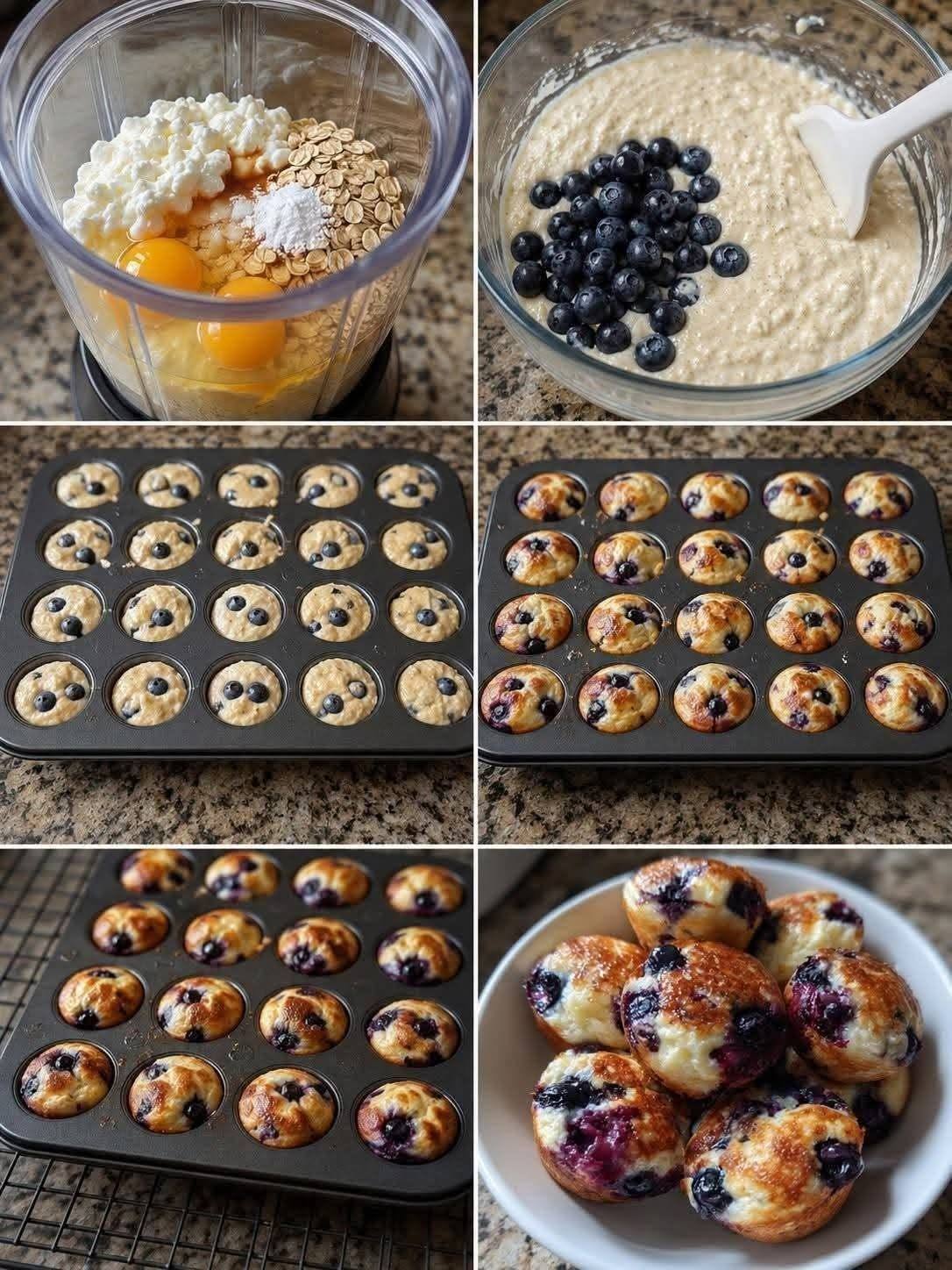
Step-by-Step Blueberry Cottage Cheese Oat Muffins
These delicious mini blueberry muffins are made with oats, cottage cheese, eggs, and fresh blueberries. They have a soft, moist texture, golden-brown tops, and a naturally sweet fruit flavor. The recipe shown in the image is a simple option for breakfast, a midday snack, or a quick homemade treat.
Ingredients
-
1 cup rolled oats
-
1 cup cottage cheese
-
2 large eggs
-
1 teaspoon baking powder
-
1 teaspoon vanilla extract (optional)
-
½–1 cup fresh blueberries
-
1–2 tablespoons honey or maple syrup (optional)
-
A small pinch of salt
-
A little cooking oil or nonstick spray for the muffin pan
These quantities are a suggested version based on the ingredients visible in the image. The exact original recipe is not provided.
Step 1: Prepare Your Kitchen
Before beginning, gather all your ingredients and kitchen equipment. You will need a blender, a mixing bowl, a spoon or spatula, a mini muffin pan, and an oven.
Preheat your oven to 350°F (175°C). Allow it to heat fully while you prepare the batter. Lightly grease the muffin pan with cooking oil or nonstick spray so the muffins can be removed easily after baking.
If you are using a silicone muffin pan, place it on a sturdy baking tray before filling it. This will make it easier to move safely in and out of the oven.
Step 2: Measure the Oats
Place one cup of rolled oats into your blender. Rolled oats provide structure and texture without requiring traditional wheat flour.
Blend the oats until they become a fine or slightly coarse powder. A finer texture will produce smoother muffins, while a coarser texture will give them a more rustic appearance.
If you prefer a heartier muffin, you can leave some of the oats partially ground. However, grinding them helps the ingredients combine more evenly and gives the finished muffins a softer texture.
Step 3: Add the Cottage Cheese
Add one cup of cottage cheese to the blender with the ground oats.
Cottage cheese provides moisture, protein, and a mild creamy flavor. It also helps create a tender texture without needing a large quantity of butter or oil.
Blend the cottage cheese and oats until they form a thick mixture. If your cottage cheese is particularly watery, the batter may be thinner. If it is very dry, you may need a small splash of milk or water to help the ingredients blend.
Avoid adding too much liquid because the batter should be thick enough to hold the blueberries in place.
Step 4: Add the Eggs
Crack two large eggs into the blender. Blend again until the eggs are fully incorporated.
Eggs help bind the ingredients together and give the muffins structure as they bake. They also contribute to the soft interior and golden color.
Scrape down the sides of the blender if necessary so that no dry oats or cottage cheese remain unmixed. The batter should look creamy and pourable but not watery.
If you are adding vanilla extract, honey, or maple syrup, mix it in at this stage. Sweetener is optional because blueberries already contribute natural sweetness.
Step 5: Add the Baking Powder and Salt
Add one teaspoon of baking powder and a small pinch of salt to the mixture. Blend briefly, just until combined.
Baking powder helps the muffins rise and become lighter. Without it, the muffins may turn out denser because oats and cottage cheese produce a naturally heavier batter than some traditional muffin mixtures.
Do not use baking soda as a direct replacement in the same quantity. Baking soda works differently and requires the right balance of acidic ingredients.
Taste the batter only if it is safe to do so without raw egg; otherwise, adjust sweetness using your ingredient measurements rather than tasting it uncooked.
Step 6: Prepare the Blueberries
Wash the blueberries under clean running water and dry them gently with a paper towel.
Measure between half a cup and one cup, depending on how much fruit you want in each muffin. Smaller blueberries are easy to distribute evenly, while larger ones create juicy pockets of fruit.
Set aside a few blueberries if you want to decorate the tops of the muffins before baking.
If using frozen blueberries, there is generally no need to thaw them first. Add them directly to the batter to help limit excess moisture and color bleeding.
Step 7: Fold the Blueberries Into the Batter
Pour the blended mixture into a mixing bowl. Add the blueberries and gently fold them in with a spoon or spatula.
Avoid vigorous stirring because blueberries can break apart and turn the batter purple. Gentle folding helps preserve their shape and distributes the fruit throughout the mixture.
Make sure the berries are spread evenly so each muffin receives a similar amount.
If you prefer a smoother muffin with fruit mainly on top, skip mixing the berries into the batter and place a few on each portion after filling the pan.
Step 8: Fill the Mini Muffin Pan
Spoon the batter into the prepared muffin pan, filling each cavity approximately three-quarters full.
Do not fill the cavities all the way to the top because the batter may rise during baking. Add one or two reserved blueberries to the top of each portion if desired.
Use the back of a spoon to smooth the surface gently. Try to distribute the batter evenly so that all the muffins finish baking at approximately the same time.
The image shows a mini muffin pan, but a standard muffin tin can also be used. Standard muffins will generally require a longer baking time.
Step 9: Bake Until Golden
Place the muffin pan on the center rack of the preheated oven.
Bake mini muffins for approximately 15–20 minutes, checking them near the end of the baking period. The tops should look set and lightly golden, and the centers should no longer appear wet.
For standard-sized muffins, baking may take approximately 20–25 minutes, depending on the pan and oven.
To check doneness, insert a toothpick into the center of a muffin without hitting a blueberry. It should come out mostly clean, without wet batter. Because the recipe contains eggs, make sure the centers are fully cooked; a food thermometer can help confirm that they reach a safe internal temperature of 160°F (71°C).
If the tops brown too quickly, check the oven temperature and position rather than allowing the outside to burn while the centers remain undercooked.
Step 10: Cool the Muffins
Remove the pan from the oven using oven mitts and place it on a heat-resistant surface.
Allow the muffins to cool in the pan for about five minutes. This helps them firm up and makes them easier to remove without breaking.
Carefully loosen the edges with a small silicone spatula if needed. Transfer the muffins to a wire rack and allow them to cool further.
The muffins may feel soft immediately after baking because the cottage cheese retains moisture. They should become easier to handle as they cool.
Step 11: Serve and Store
Serve the muffins warm or at room temperature. They pair well with plain yogurt, fresh fruit, or a cup of tea or coffee.
For storage, place cooled muffins in an airtight container and refrigerate them because they contain eggs and cottage cheese. Use them within about three to four days. They can also be frozen in a suitable airtight container for around two to three months for best quality.
To reheat refrigerated muffins, warm them briefly in the microwave or oven until heated through. Thaw frozen muffins in the refrigerator or reheat them thoroughly before serving.
Final Tips for Better Results
-
Use fresh baking powder to help the muffins rise.
-
Avoid adding too much liquid to the batter.
-
Fold blueberries gently to prevent the mixture from becoming overly purple.
-
Grease the pan well, especially if it is not nonstick.
-
Adjust the sweetness to suit your preference.
-
Allow the muffins to cool before storing them.
These blueberry cottage cheese oat muffins offer a convenient way to combine fruit, oats, eggs, and dairy in one homemade snack. Their soft centers, juicy blueberries, and lightly browned tops make them suitable for breakfast, lunchboxes, or an easy snack throughout the day.

