
Fluffy Oat and Cottage Cheese Pancakes: A Wholesome Breakfast Recipe
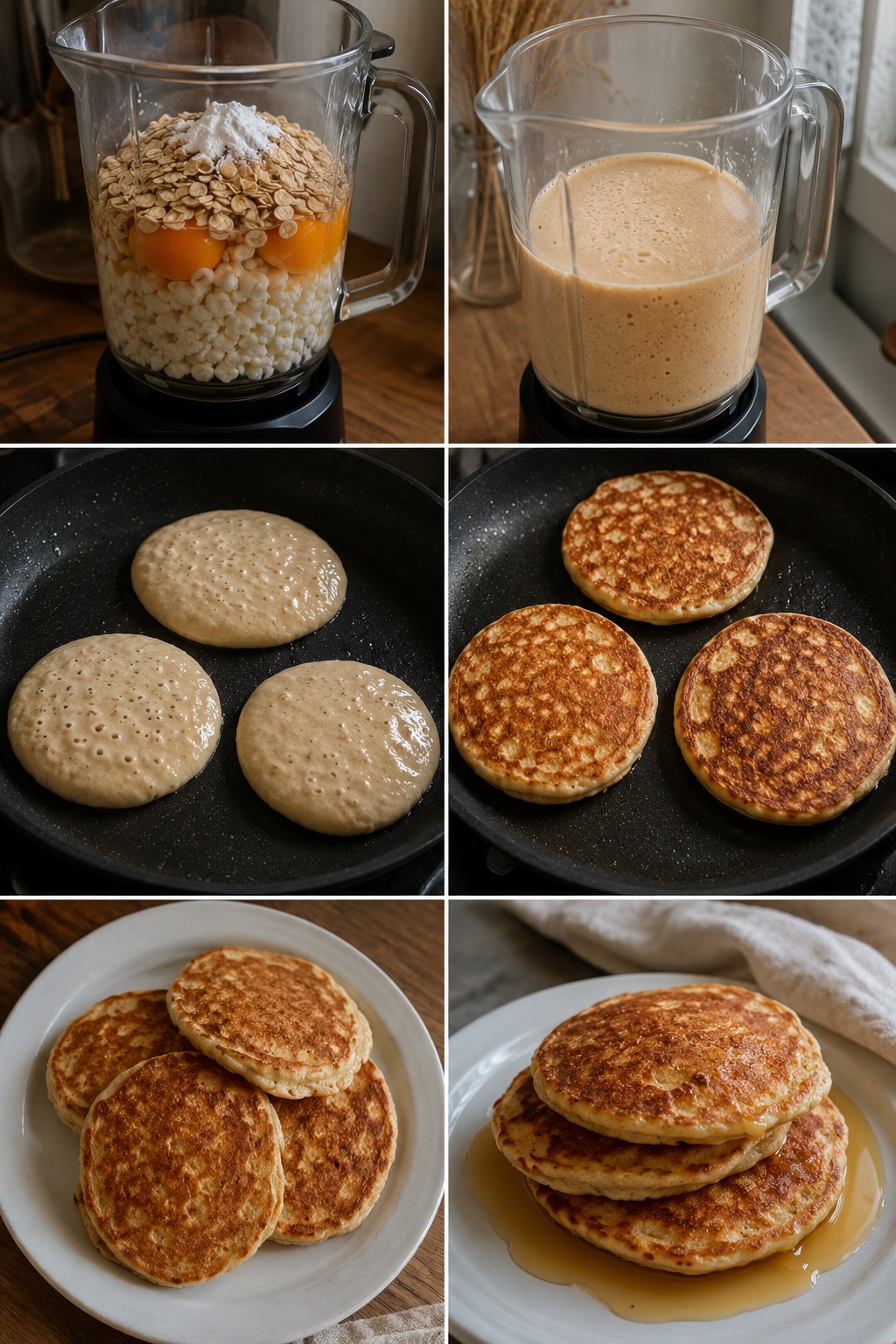
There is something wonderfully comforting about a stack of freshly cooked pancakes. Golden on the outside, soft and tender in the middle, and finished with a generous drizzle of syrup, pancakes are a breakfast favorite in many households. The image above shows a particularly wholesome variation made with oats, cottage cheese, and eggs. These ingredients are blended together to create a smooth batter before being cooked into thick, fluffy pancakes.
Unlike traditional pancakes made primarily with refined flour, this version combines several nutritious ingredients in a simple preparation. Rolled oats provide a hearty base, cottage cheese contributes protein and creaminess, while eggs help bind the mixture and give the pancakes structure. The result is a satisfying breakfast that feels indulgent while incorporating ingredients commonly associated with balanced eating.
Ingredients and Their Role
The first stage shown in the image features a blender filled with the main ingredients. Rolled oats form the largest portion of the mixture. Oats are naturally rich in carbohydrates and contain dietary fiber, making them a useful ingredient for a filling breakfast. They also provide a pleasant mild, slightly nutty flavor that works especially well in pancakes.
Cottage cheese is another important component. Although it may seem unusual in pancake batter, cottage cheese can produce remarkably tender results. When blended thoroughly, the curds become smooth and incorporate into the batter without leaving a strong cottage-cheese texture. It also adds moisture and protein.
Two eggs are visible in the blender. Eggs contribute richness, help bind the ingredients, and provide structure as the pancakes cook. A small amount of baking powder appears on top of the ingredients as well. This leavening agent helps the pancakes rise, producing the characteristic fluffy texture visible in the finished stack.
A basic version of the recipe can be made with rolled oats, cottage cheese, eggs, baking powder, and a small amount of sweetener or flavoring if desired. Depending on personal preference, vanilla extract, cinnamon, a pinch of salt, or a little honey can also be added.
Blending the Batter
The second image shows the ingredients after blending. The mixture has become a smooth, pale golden batter with a consistency similar to traditional pancake batter.
Blending is particularly useful for this recipe because it breaks down the oats and cottage cheese. This creates a much smoother pancake than simply stirring the ingredients together. A high-powered blender can produce an especially fine consistency, although a standard blender can also work effectively.
It is helpful to allow the batter to rest for a few minutes after blending. The oats will absorb some of the liquid during this time, causing the mixture to thicken slightly. If it becomes excessively thick, a small splash of milk or another liquid can be added to achieve a pourable consistency.
The batter should be thick enough to hold its shape briefly when poured onto a hot pan but not so thick that it cannot spread naturally. Getting this consistency right is one of the easiest ways to achieve evenly cooked pancakes.
Cooking the Pancakes
The third stage in the image shows several pancakes cooking in a frying pan. The pancakes are relatively thick and have been spaced apart so they can cook without touching.
For the best results, heat a nonstick skillet or well-seasoned pan over medium to medium-low heat. A small amount of butter or cooking oil can be used if necessary. Once the pan is hot, pour portions of batter onto the surface.
One of the most important techniques is avoiding excessively high heat. Because these pancakes are thick and contain oats and cottage cheese, the outside can brown quickly while the center remains undercooked if the temperature is too high. Moderate heat allows the interior to cook gradually while the surface develops an attractive golden color.
After pouring the batter, allow the pancakes to cook undisturbed. Small bubbles will begin appearing across the surface, as shown in the image. The edges will also become more set and slightly dry-looking. These are useful signs that the pancake is ready to turn.
Carefully flip each pancake using a wide spatula. The cooked side should be golden brown. Continue cooking the second side until it is evenly browned and the pancake feels firm enough to lift without bending excessively.
Achieving a Golden-Brown Finish
The fourth image shows the pancakes after flipping. Their surfaces are beautifully browned, with a mixture of lighter and darker golden areas that give them a homemade appearance.
Color is not merely decorative. Proper browning contributes flavor through the chemical reactions that occur when proteins and sugars are heated. However, the goal is golden brown rather than very dark brown or burnt.
If the pancakes are browning too quickly, reduce the heat. If they remain pale after several minutes and the batter seems slow to cook, the pan may need slightly more heat. Since stovetops and pans vary considerably, visual cues are often more useful than following a precise cooking time alone.
The finished pancakes should be cooked through while remaining soft and tender inside. Cutting into one pancake can help confirm that the center is no longer wet or raw.
Serving the Pancakes
The final images show a beautiful stack of finished pancakes arranged on a plate. Their browned surfaces contrast with are warm. Maple syrup is a classic topping, but there are many other possibilities. Fresh berries, sliced their soft interiors, and the stack is topped with syrup that flows down the sides.
These pancakes can be served immediately while they are warm. Maple syrup is a classic topping, but there are many other possibilities. Fresh berries, sliced bananas, chopped nuts, yogurt, nut butter, or a dusting of cinnamon can all complement the mild oat flavor.
For a fruit-forward breakfast, strawberries, blueberries, raspberries, or sliced peaches can be placed over the stack. A spoonful of Greek-style yogurt can add creaminess, while nut butter more reliable. First, use rolled oats rather than very coarse oat grains if you want a smooth batter can provide a rich, savory-sweet contrast.
If sweetness is not a priority, the pancakes can also be served with fresh fruit and yogurt without much added syrup. Their naturally mild flavor makes them flexible enough for different toppings.
Helpful Preparation Tips
Several small details can make this recipe more reliable. First, use rolled oats rather than very coarse oat grains if you want a smooth batter. Second, blend the ingredients thoroughly so the cottage cheese is fully incorporated.
Do not make the pancakes excessively large. Smaller control is also important. Medium or medium-low heat generally gives the pancakes enough time to cook through. If the first batch browns too quickly, reduce the or medium-sized pancakes are easier to flip and cook more evenly. Leave sufficient space between them in the pan, as shown in the cooking stages.
Temperature control is also important. Medium or medium-low heat generally gives the pancakes enough time to cook through. If the first batch browns too quickly, reduce the heat before cooking the remaining batter.
Finally, resist the temptation to press down on the pancakes with the spatula. Pressing can force out some of the air developed during cooking and result in flatter, denser pancakes.
A Convenient Breakfast Option
One of the most appealing aspects of these pancakes is their simplicity. The ingredients can be combined in a blender, meaning there is no can also be prepared in batches. Once cooled, leftovers can be stored in the refrigerator and reheated later. They can also be frozen with pieces need for several mixing bowls or complicated preparation. This makes the recipe particularly convenient on busy mornings.
The pancakes can also be prepared in batches. Once cooled, leftovers can be stored in the refrigerator and reheated later. They can also be frozen with pieces of parchment separating individual pancakes, making it easy to remove only the number needed for breakfast.
Whether served with maple syrup, fresh fruit, yogurt, or enjoyed on their own, these oat and cottage cheese pancakes offer a satisfying alternative to conventional flour-based pancakes. The process shown in the image—from combining the ingredients to blending, cooking, flipping, and stacking—demonstrates how a handful of simple ingredients can become a warm and inviting breakfast.
The finished stack is thick, golden, and tender, with a texture that makes it especially appealing for anyone looking for a hearty homemade pancake. With minimal preparation and plenty of opportunities for customization, this recipe can easily become a dependable addition to a weekend breakfast or everyday morning routine.

