
Swollen Red Sore With a Dark Center: Possible Causes, Warning Signs, and Step-by-Step Care
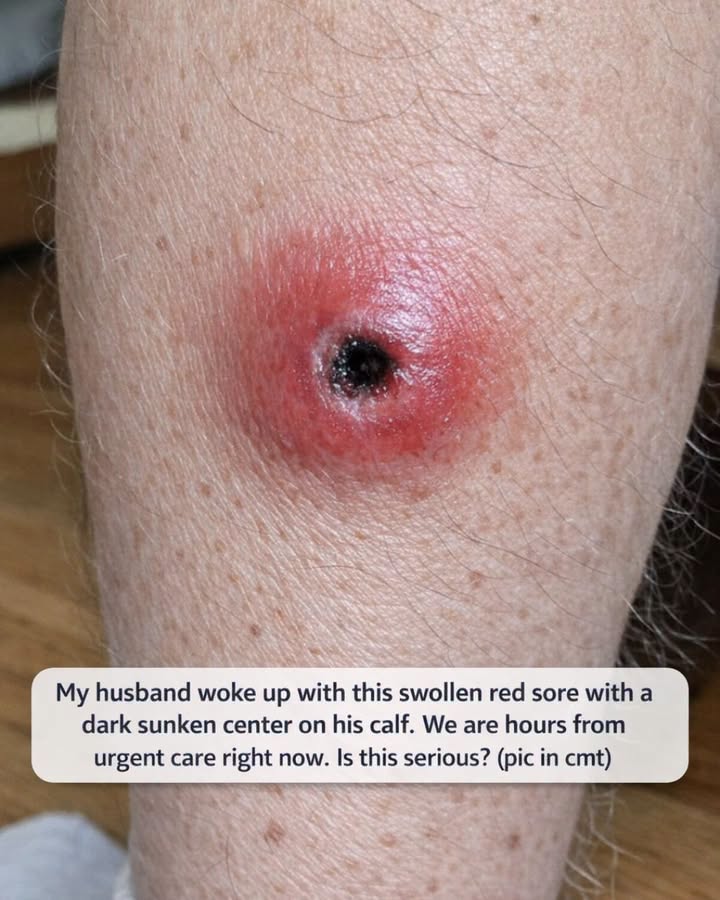
A swollen red sore with a dark or sunken center can be alarming, especially when it appears suddenly on the leg. The image shows a raised, inflamed area on the calf with redness and swelling surrounding a dark central spot. Although several skin conditions can cause this appearance, it is not possible to identify the exact cause from a photograph alone.
Possible explanations include an infected insect bite, a skin abscess, a bacterial skin infection, or an injury that has damaged the skin. In some cases, a dark center can indicate dead or damaged tissue, which requires prompt medical evaluation. Because the sore appears inflamed and has a dark center, it should not be ignored.
Important: If someone develops a sore that looks like this, they should seek urgent medical assessment today. If the redness is spreading quickly, the pain is severe, the skin is turning black, or the person develops fever, confusion, or weakness, they should seek emergency care immediately. Being far from an urgent care clinic is not a reason to delay emergency help.
1. What Does a Swollen Red Sore With a Dark Center Mean?
A sore with a red, swollen border and a dark center may develop when the skin becomes inflamed or injured. The surrounding redness can occur as the body’s immune system responds to irritation, infection, or tissue damage.
The dark center may represent a scab, dried blood, damaged skin, or another type of lesion. Its appearance alone cannot establish whether the problem is caused by a spider bite, another insect, a bacterial infection, or a more serious skin condition.
Several details can help a healthcare professional assess the situation:
-
Redness: A growing red area may indicate spreading inflammation or infection.
-
Swelling: Raised skin can develop around an infected bite or abscess.
-
Dark center: A black or sunken area may be a scab, but it can also signal tissue damage.
-
Pain or tenderness: Increasing pain can be a warning sign of a worsening infection.
-
Warmth: Skin that feels warmer than the surrounding area may be inflamed or infected.
-
Discharge: Pus, fluid, or an unpleasant smell can suggest an infection.
No single sign confirms the diagnosis. The combination of swelling, redness, and a dark center makes prompt examination particularly important.
2. Possible Causes of This Type of Skin Lesion
A. Infected insect bite
An insect bite can cause localized redness, itching, swelling, and tenderness. If bacteria enter the skin through the bite or scratching, the area may become infected.
An infected bite can develop a central crust or small open sore. However, a dark center does not prove that an insect caused the lesion. Many skin infections initially resemble bites.
B. Skin abscess or boil
A skin abscess is a pocket of pus that develops when bacteria infect tissue beneath the skin. It may begin as a small, tender bump and gradually become red, swollen, warm, and painful.
Some abscesses develop a central opening or dark crust. Others produce pus or feel soft in the middle. A healthcare professional may need to drain an abscess safely, and antibiotics may be necessary in certain cases.
Do not squeeze, puncture, or attempt to drain the sore at home.
C. Cellulitis
Cellulitis is a bacterial infection affecting the deeper layers of the skin and the tissue beneath it. It commonly causes redness, warmth, swelling, and pain. The affected area may expand over time.
A dark central lesion accompanied by surrounding redness could occur alongside a skin infection, although cellulitis itself does not usually explain every type of black-centered sore.
Cellulitis requires medical assessment and often treatment with antibiotics. Delaying treatment can allow the infection to spread.
D. A possible spider bite
People sometimes associate a dark-centered sore with a spider bite. However, confirmed spider bites are less common than people often assume, and many lesions blamed on spiders are actually bacterial infections or other skin conditions.
The appearance of a sore alone cannot identify a spider species or establish that a bite occurred. Treatment should focus on the symptoms and medical findings rather than an assumed bite.
E. Damaged or dying skin tissue
A black center can sometimes indicate tissue damage, particularly when accompanied by worsening pain, swelling, spreading redness, blistering, or skin discoloration.
Rare but serious infections can damage tissue rapidly. Severe pain, especially pain that seems much greater than the visible skin changes would suggest, is an emergency warning sign.
A dark center does not automatically mean that tissue is dying, but it should be evaluated rather than dismissed as an ordinary scab.
3. Step-by-Step: What to Do When You Discover This Sore
If someone wakes up with a swollen red sore on the calf, the following steps can help reduce the risk of further irritation while arranging medical care.
Step 1: Check for emergency warning signs
First, look for symptoms that suggest the condition may be serious. Check whether the redness is spreading, the swelling is increasing, or the center is becoming darker.
Seek emergency medical care immediately if any of the following occur:
-
Rapidly spreading redness or swelling.
-
Severe or rapidly increasing pain.
-
Blackening skin, purple patches, or new blisters.
-
Fever, chills, confusion, faintness, or marked weakness.
-
Red streaks extending away from the sore.
-
Rapid breathing, a racing heartbeat, or feeling seriously unwell.
If the person has diabetes, poor circulation, or a weakened immune system, they should be particularly cautious and obtain prompt medical advice.
Step 2: Arrange medical evaluation
A sore with a dark center and a swollen red border deserves an in-person examination, preferably the same day. A clinician can assess the skin, check for an abscess, and determine whether the infection is spreading.
If the nearest urgent care facility is several hours away, contact a local emergency service, hospital, or qualified healthcare professional for immediate guidance. Do not wait until the next day if warning signs are present.
Step 3: Clean the area gently
If the skin is open, gently rinse it with clean running water. Mild soap can be used on the surrounding skin.
Avoid scrubbing the dark center or trying to remove a scab. Do not pour bleach, alcohol, or harsh cleaning chemicals into the wound, as these can irritate and damage tissue.
Pat the surrounding skin dry with clean gauze or a clean towel.
Step 4: Protect the sore
Cover the area loosely with a sterile, nonstick dressing if available. Change the dressing whenever it becomes wet or dirty.
Avoid tight bandages that press on the swollen area. Do not apply pressure to the center, and do not use a needle or blade to open the sore.
If possible, keep the leg comfortably elevated while waiting for medical advice, provided this does not increase discomfort.
Step 5: Monitor changes
If doing so does not delay medical care, take a photograph of the sore and note the time. This can help a clinician understand how quickly it is changing.
Observe the redness, swelling, pain, and any discharge. You may mark the outer edge of the redness with a pen to help identify whether it spreads, but do not let monitoring replace medical assessment.
Step 6: Avoid unprescribed treatments
Do not apply home remedies, strong chemicals, or leftover antibiotic creams or tablets without professional advice. Do not assume that an over-the-counter cream will treat a deeper infection.
The correct treatment depends on the underlying cause. An abscess may require drainage, while a bacterial skin infection may require prescription antibiotics. Damaged tissue or a rapidly progressing infection may need more urgent specialist treatment.
4. How Doctors Diagnose the Cause
A healthcare professional will usually ask when the sore appeared, whether it is painful or itchy, whether the person noticed an insect bite, and whether the lesion has changed in size.
The examination may include checking:
-
The size and depth of the lesion.
-
The warmth and extent of surrounding redness.
-
Whether pus or fluid is present.
-
Whether there are signs of an abscess or damaged tissue.
-
The person’s temperature and other vital signs.
-
Relevant medical conditions, medications, and immune-system risks.
Depending on the findings, a clinician may recommend an ultrasound to look for a collection of pus, a wound culture if drainage is present, or blood tests if a more serious infection is suspected.
Not everyone needs all these tests. The appropriate assessment depends on the appearance of the wound and the person’s overall condition.
5. Treatment Options Depend on the Diagnosis
Treatment varies according to the cause.
For an infected bite: A clinician may recommend appropriate wound care and antibiotics if a bacterial infection is present.
For an abscess: Professional drainage may be necessary. Antibiotics may also be prescribed depending on the severity and surrounding infection.
For cellulitis: Prescription antibiotics are commonly required. Severe cases may need hospital treatment and antibiotics given through a vein.
For tissue damage or a serious infection: Emergency assessment and specialist treatment may be necessary. In some cases, damaged tissue needs surgical treatment.
It is important to complete prescribed antibiotics exactly as directed and attend any recommended follow-up appointments.
6. How to Reduce the Risk of Future Skin Infections
Simple habits can reduce the chance of bacteria entering damaged skin.
-
Wash cuts and scratches promptly with clean water.
-
Avoid scratching insect bites.
-
Keep wounds covered with clean dressings.
-
Do not share towels, razors, or other personal items that may carry bacteria.
-
Wear protective clothing when gardening or spending time outdoors.
-
Check the legs and feet regularly if circulation problems or diabetes are present.
-
Seek medical advice when a wound becomes increasingly red, swollen, warm, or painful.
These precautions cannot prevent every skin infection, but they can help reduce avoidable risks.
7. Frequently Asked Questions
Is a black center on a red sore dangerous?
It can be. A black center may be dried blood or a scab, but it can also represent damaged tissue. When it appears with substantial redness and swelling, prompt medical assessment is advisable.
Does this definitely mean a spider bite?
No. Many bacterial infections and other skin conditions can resemble spider bites. A photograph alone cannot establish the cause.
Can the sore heal on its own?
Some minor bites and superficial wounds improve without specific treatment. However, a swollen lesion with a dark center should not be assumed to be harmless. A deeper infection or abscess may worsen without appropriate treatment.
Should the dark center be removed?
No. Do not cut, scrape, or pull it off yourself. A healthcare professional can determine whether any wound cleaning or removal of damaged tissue is necessary.
Can redness around the sore mean the infection is spreading?
Yes, spreading redness can be a sign of an expanding infection. Rapid progression, severe pain, fever, or blackening skin warrants emergency care.
Conclusion
A swollen red sore with a dark, sunken center on the calf can result from several conditions, including an infected insect bite, a skin abscess, cellulitis, or tissue damage. The photograph cannot establish which condition is responsible, and the dark center should not automatically be attributed to a spider bite.
The safest approach is to arrange an in-person medical assessment promptly, keep the area clean and covered, and avoid squeezing or cutting the lesion. If the redness spreads quickly, the pain becomes severe, the skin turns black, or systemic symptoms develop, seek emergency care immediately.
Remember: Early evaluation can help identify the cause and ensure that appropriate treatment begins before a potentially serious skin infection progresses.

