
Eyelash Mites and Their Larvae: Causes, Symptoms, Treatment, and Step-by-Step Prevention Guide
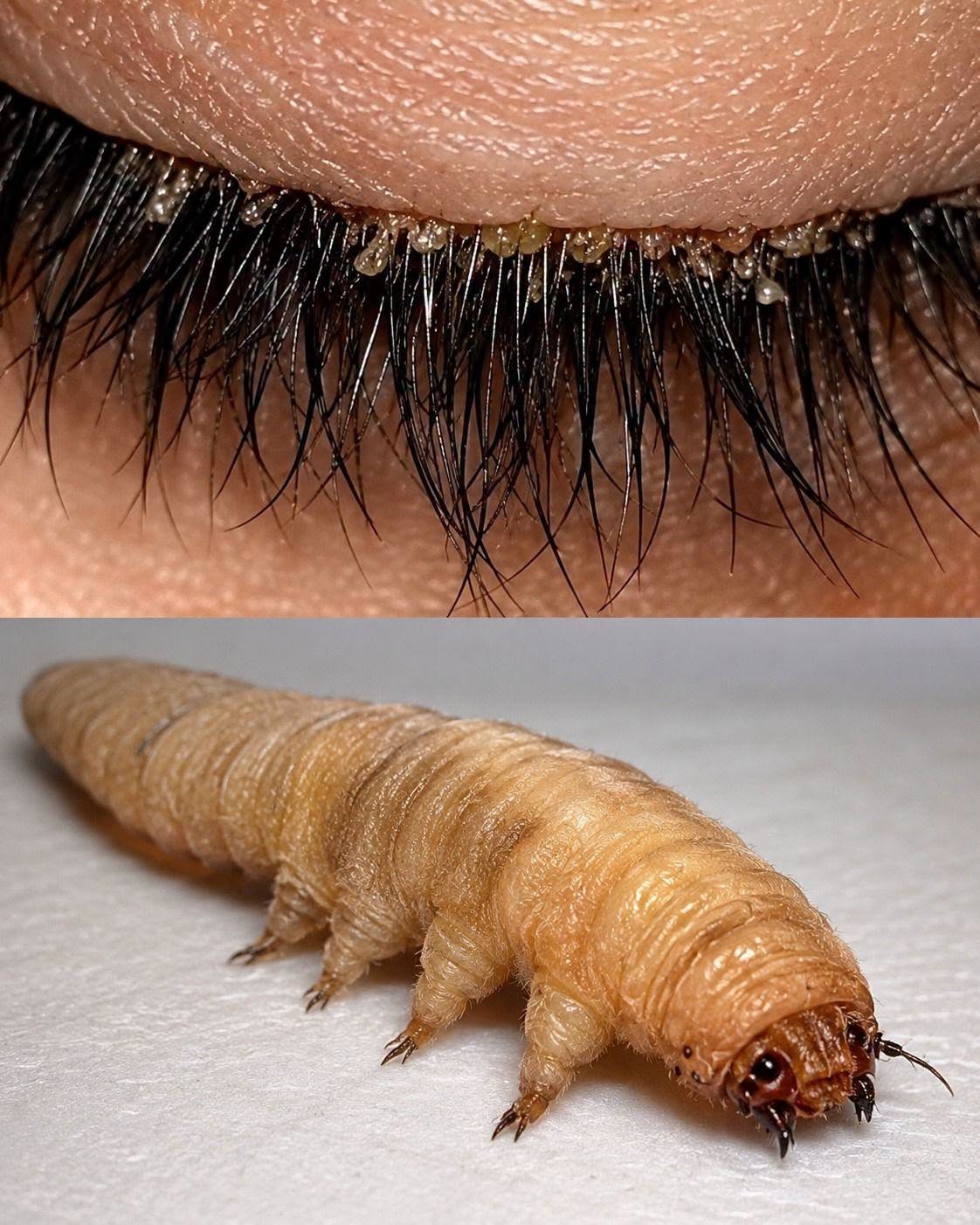
The image shows two close-up views of an eyelid with small deposits around the eyelashes and a worm-like insect. These images may resemble conditions associated with eyelash mites or other tiny organisms, but the photographs alone cannot confirm the exact species. In particular, the long, segmented creature shown in the lower image does not look like a typical human eyelash mite, which is microscopic.
Eyelash mites, commonly known as Demodex mites, are microscopic organisms that can live in hair follicles and oil glands, including those around the eyelashes. They are common in adults and often cause no symptoms. However, when their numbers increase, they may contribute to eyelid inflammation, irritation, itching, redness, and crusting around the eyelashes. Understanding the causes, symptoms, diagnosis, and proper treatment can help protect eye health.
1. What Are Eyelash Mites?
Eyelash mites are tiny organisms that naturally live on human skin. Two species, Demodex folliculorum and Demodex brevis, are commonly associated with humans.
Demodex folliculorum usually lives in hair follicles, including those around the eyelashes. Demodex brevis tends to live deeper in the oil-producing glands of the skin.
These mites are too small to be seen clearly with the naked eye. They feed on material such as skin cells and oils found around the follicles and glands.
Most people who carry these mites do not experience any problems. Symptoms may develop when the mites multiply excessively or when the eyelids become inflamed.
The crusty or waxy material visible at the base of eyelashes in the upper image could have several explanations, including eyelid debris, dried oil, or cylindrical dandruff associated with Demodex blepharitis. A proper examination is needed to determine the cause.
2. Common Causes of Eyelash Mite Problems
Several factors may contribute to eyelid irritation or an increased population of eyelash mites.
Poor eyelid hygiene: Not removing makeup, accumulated oil, and debris from the eyelid margins can contribute to irritation and inflammation.
Excess oil production: Oil-producing glands around the eyelashes provide an environment in which these mites can live.
Increasing age: Demodex mites become more common as people get older.
Sharing eye cosmetics: Sharing mascara, eyeliner, or other eye products can increase the risk of spreading certain eye infections and may expose people to contaminated products.
Skin conditions: Conditions such as rosacea and seborrheic dermatitis may occur alongside eyelid inflammation.
Certain medical conditions: Some illnesses or treatments that affect the immune system may influence skin health and the balance of microorganisms.
It is important to understand that having eyelash mites does not automatically mean someone has poor hygiene. These organisms are common even in people who maintain good personal hygiene.
3. Signs and Symptoms to Watch For
Eyelash mite overgrowth may cause a condition called Demodex blepharitis, which is inflammation of the eyelid margins.
Common symptoms include:
-
Itching along the eyelid margins, especially near the eyelashes.
-
Redness and irritation around the eyes.
-
Small, sleeve-like deposits surrounding the base of eyelashes.
-
A burning or gritty sensation in the eyes.
-
Dryness or excessive watering.
-
Crusting around the eyelashes after sleeping.
-
Eyelashes becoming brittle or falling out in more severe cases.
-
Blurred vision or light sensitivity when other eye problems are present.
These symptoms are not exclusive to eyelash mites. Bacterial blepharitis, allergies, dry eyes, and other skin conditions can cause similar problems.
If you notice a large, visible worm-like creature near your eye, do not assume it is a Demodex mite. It may be a different organism, debris, or an object placed near the eye for the photograph. A healthcare professional can examine it and identify the cause.
4. Step-by-Step Guide to Managing Eyelash Mites
Proper eyelid care can help reduce debris and irritation. The following steps are suitable for general eyelid hygiene, but persistent symptoms may require medical treatment.
Step 1: Wash Your Hands
Before touching the area around your eyes, wash your hands thoroughly with soap and clean water.
Dry them with a clean towel. This helps reduce the transfer of dirt and germs to the eyelids.
Avoid rubbing your eyes, scratching the eyelid margins, or attempting to pull out suspected organisms.
Step 2: Apply a Warm Compress
Close your eyes and place a clean, comfortably warm compress over the eyelids for approximately five to ten minutes.
The warmth can help soften oily deposits and crusts around the eyelashes.
Make sure the compress is not hot enough to burn the delicate skin around the eyes. Use a clean compress for each eye if there is a possibility of infection.
Step 3: Clean the Eyelid Margins Gently
Use a commercially prepared eyelid-cleaning wipe or a cleanser specifically designed for eyelid hygiene.
Follow the product instructions and gently clean the eyelid margin without rubbing the eyeball.
Do not use household disinfectants, alcohol, concentrated essential oils, or undiluted tea tree oil around the eyes. These substances can cause significant irritation or damage.
Step 4: Remove Eye Makeup Carefully
If you use mascara, eyeliner, or other eye makeup, remove it gently before sleeping.
Avoid sharing cosmetics with other people. Replace old or contaminated eye makeup, especially products that have been associated with irritation or an eye infection.
If your eyelids are inflamed, consider temporarily avoiding eye makeup until the symptoms improve.
Step 5: Maintain a Consistent Routine
Perform gentle eyelid hygiene regularly, following the instructions of your eye-care professional or eyelid-cleaning product.
Consistency is more useful than aggressive scrubbing. Excessive cleaning can damage the skin barrier and make irritation worse.
If symptoms continue despite regular cleaning, arrange an eye examination rather than repeatedly trying stronger home remedies.
Step 6: Avoid Unproven Home Treatments
Never apply insecticides, pet mite treatments, household pesticides, or veterinary medicines to the eyelids.
Do not try to remove a suspected worm or insect using tweezers, needles, or sharp instruments near the eye.
Prescription treatments may be necessary for confirmed Demodex blepharitis. An eye-care professional can determine whether a targeted medication is appropriate.
Step 7: Seek Medical Advice When Needed
Arrange an appointment with an optometrist or ophthalmologist if you have persistent itching, crusting, eyelash loss, or recurring eyelid inflammation.
A clinician may examine the eyelashes under magnification and look for characteristic deposits. In some cases, microscopic examination or other testing may be necessary.
Prompt assessment is particularly important if an actual visible organism appears to be attached to the eyelid or embedded in the skin.
5. Medical Treatment for Demodex Blepharitis
Treatment depends on the diagnosis and severity of the symptoms.
An eye-care professional may recommend specialized eyelid cleansers, supportive eyelid hygiene, or prescription medication.
In the United States, lotilaner ophthalmic solution 0.25% is an approved prescription treatment for Demodex blepharitis. Availability and prescribing guidance vary by country.
Other treatments may be considered according to the patient’s condition, but medication should not be selected solely from an online photograph.
Oral ivermectin and other antiparasitic medicines should not be self-prescribed for suspected eyelash mites. They may be inappropriate for the condition, and their safety depends on individual circumstances.
Antibiotic eye drops are not a universal treatment for Demodex mites because antibiotics do not directly eliminate these mites.
6. How to Prevent Eyelid Irritation
Good eyelid care may reduce irritation and help prevent recurring symptoms.
Keep your hands clean before touching your eyes. Remove makeup before bedtime and avoid sharing eye cosmetics or towels that may be contaminated with eye secretions.
Clean reusable makeup tools according to their manufacturers’ instructions. Replace old eye products and avoid applying cosmetics to irritated eyelids.
If you have a recurring skin condition, ask your healthcare professional how it may affect your eyelids.
Remember that Demodex mites are naturally present on many adults. The goal is not necessarily to eliminate every mite but to manage symptoms and inflammation when they become a problem.
7. Are Eyelash Mites Dangerous?
In many people, eyelash mites are harmless and do not require treatment.
When they contribute to significant eyelid inflammation, however, they can cause ongoing discomfort. Severe or untreated eyelid inflammation may sometimes affect the surface of the eye.
Seek urgent medical care if you experience eye pain, a sudden change in vision, substantial swelling, marked redness, or significant sensitivity to light. These symptoms may indicate a problem more serious than ordinary eyelash mite infestation.
If you believe a visible insect or larva has entered your eye, avoid attempting to extract it yourself and seek prompt professional assessment.
8. When to Consult an Eye Specialist
You should seek professional advice if eyelid crusting persists, your eyelashes begin falling out, symptoms repeatedly return, or ordinary eyelid cleaning does not help.
An eye specialist can distinguish Demodex blepharitis from bacterial infection, allergies, blocked oil glands, and other causes of eyelid problems.
Bring a clear photograph of the suspected organism if you have one. If an object or specimen is available, ask the clinician how it can be safely preserved for identification rather than placing it directly against your eye.
Conclusion
Eyelash mites are microscopic organisms that commonly live around human hair follicles. Although they are usually harmless, excessive numbers can contribute to eyelid irritation, itching, redness, and crusting.
The safest approach is to maintain gentle eyelid hygiene, avoid dangerous home remedies, and seek medical advice when symptoms persist. The images shown here cannot establish that the long, segmented organism is an eyelash mite or even identify it as a parasite.
The most important point is to identify the actual cause before attempting treatment. Proper examination can help prevent unnecessary medication and protect the delicate tissues around your eyes.

