
Table of Contents
ToggleBurning Blistering Rash Around the Side: What It Could Mean and What to Do
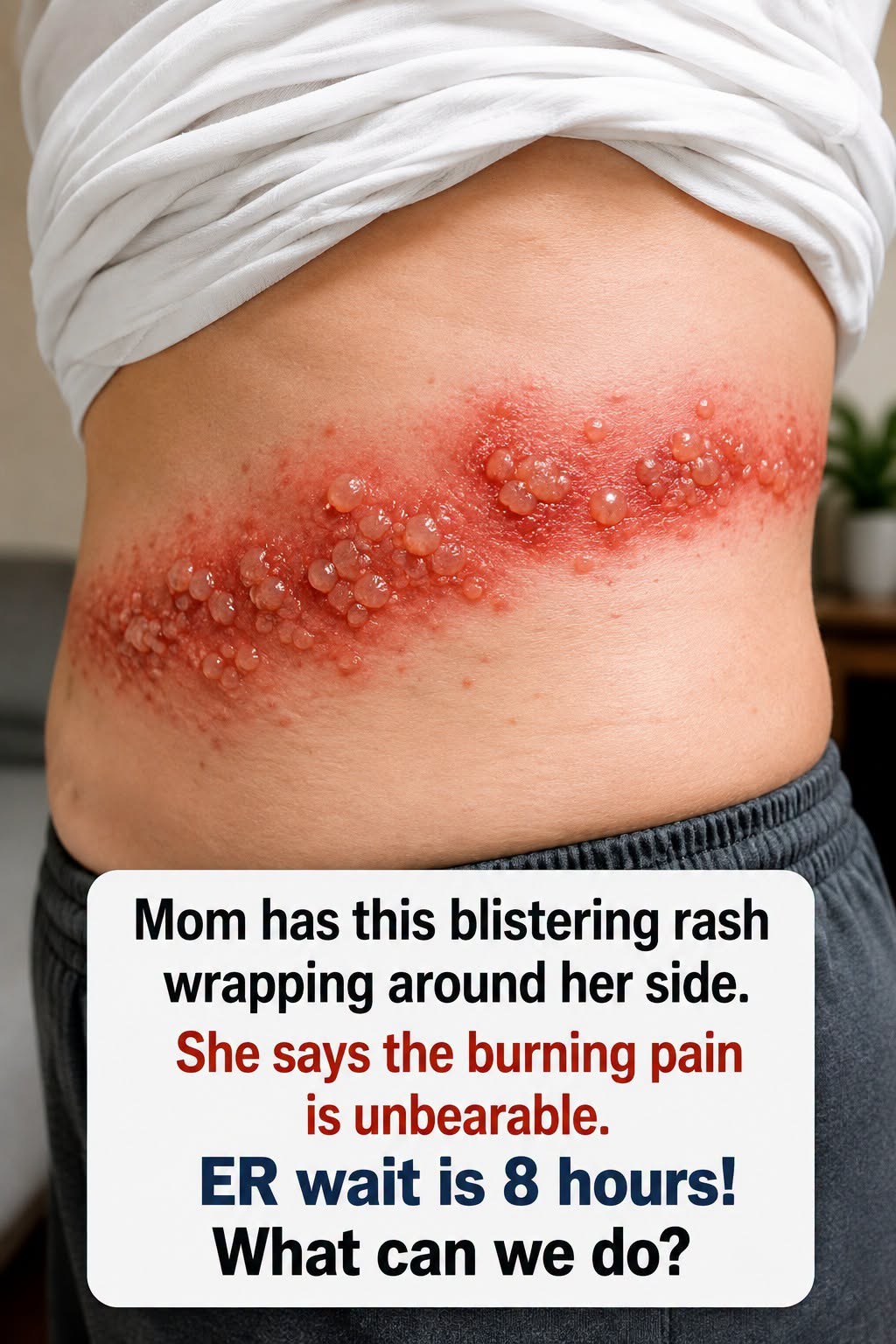
A painful blistering rash that wraps around one side of the waist, abdomen, chest, or back can be alarming, especially when the burning pain is severe. The rash shown in the picture has features that can be seen with shingles, also known as herpes zoster. Shingles can cause a band or strip of painful red skin covered with clusters of fluid-filled blisters, usually appearing on only one side of the body.
Although a picture cannot confirm a diagnosis, a new blistering rash accompanied by intense burning, tingling, sensitivity, or pain deserves medical attention. Early treatment can be important, particularly when shingles is suspected.
What Is Shingles?
Shingles is caused by the varicella-zoster virus, the same virus responsible for chickenpox. After someone has chickenpox, the virus does not completely leave the body. Instead, it remains inactive inside nerve tissue.
Years or even decades later, the virus can become active again and travel along a nerve toward the skin. This produces inflammation and a characteristic rash that often follows the path of a single nerve.
Because nerves run in specific patterns around the body, shingles commonly appears as a band on one side of the chest, abdomen, back, waist, or face. It usually does not cross the body’s midline.
The rash often begins with burning, itching, tingling, unusual sensitivity, or pain. Red patches can then develop, followed by groups of small fluid-filled blisters.
Why Can the Pain Be So Severe?
Shingles is different from an ordinary skin rash because the virus affects nerve tissue. The inflammation around the affected nerve can produce intense pain.
People may describe the sensation as burning, stabbing, electric, shooting, or extremely sensitive to touch. Even clothing touching the skin can sometimes feel uncomfortable.
In some people, pain can begin before the rash becomes visible. This can make the condition confusing at first because the person may feel pain in one area without knowing why.
Once the blisters appear, the combination of skin inflammation and nerve irritation can make the discomfort particularly intense.
The Rash Often Appears in a Band
One of the clues that can make shingles recognizable is its distribution. Instead of covering the entire body, the rash often appears in a localized strip or band.
It may begin near the spine and extend toward the front of the chest or abdomen. In other cases, it may affect part of the back, waist, neck, or face.
The blisters generally develop in clusters over a red or irritated area. They can become cloudy, break open, dry, and eventually form crusts as the illness progresses.
However, not every blistering rash is shingles. Allergic reactions, infections, insect-related reactions, and other skin conditions can produce blisters. A healthcare professional may need to examine the rash to determine the cause.
Why Medical Care Should Not Be Delayed
When shingles is suspected, contacting a healthcare professional promptly is important. Antiviral medicines are commonly used to treat shingles and work best when started early in the illness.
A doctor or other qualified healthcare professional can assess the rash, consider the person’s age and medical history, and determine whether antiviral treatment is appropriate.
Waiting several days without seeking medical advice may mean missing the period when treatment is most beneficial. This is especially important for older adults and people with weakened immune systems.
If an emergency department has a long waiting time, a person with a suspected shingles rash can still contact another appropriate healthcare service, such as an urgent-care clinic, primary-care provider, or local medical service, depending on what is available.
What Can Be Done While Waiting for Medical Advice?
While waiting to be evaluated, keeping the affected area clean and dry can help reduce irritation. Loose-fitting clothing may be more comfortable than tight clothing rubbing against the blisters.
Cool, clean compresses can sometimes provide temporary relief from burning or itching. The compress should not be extremely cold, and ice should not be placed directly against the skin.
Avoid scratching, squeezing, or intentionally breaking the blisters. Damaging them can increase irritation and may contribute to bacterial infection.
Pain-relieving medicines may help some people, but the safest choice depends on age, medical conditions, allergies, pregnancy status, and other medications being taken. A pharmacist or healthcare professional can help determine what is appropriate.
Do not apply random creams, strong chemicals, or home remedies to an unexplained blistering rash. Some products can further irritate damaged skin.
Is Shingles Contagious?
Shingles itself is not spread from one person to another in the same way that chickenpox spreads. However, the fluid from shingles blisters contains the varicella-zoster virus.
A person who has never had chickenpox or received protection through vaccination can potentially develop chickenpox after direct contact with fluid from shingles blisters.
Until the blisters have crusted over, someone with shingles should avoid direct contact between the rash and people who are particularly vulnerable, including pregnant people who are not immune to chickenpox, newborn babies, and individuals with weakened immune systems.
Keeping the rash covered when practical, avoiding scratching, and washing hands regularly can reduce the risk of spreading the virus.
When Is Shingles an Emergency?
Some locations and symptoms require especially urgent medical attention.
A rash involving the eye, forehead, nose, or area around the eye should be assessed urgently because shingles affecting facial nerves can threaten vision.
Immediate medical attention is also appropriate when someone develops confusion, severe weakness, difficulty breathing, widespread blistering, severe headache, or other serious symptoms.
People with significantly weakened immune systems should seek medical advice promptly if they develop a new blistering rash.
A very painful rash accompanied by fever, rapidly increasing redness, swelling, pus, or other signs of infection also needs medical evaluation.
Can Shingles Cause Problems After the Rash Goes Away?
Most people recover from shingles, but some continue to experience nerve pain after the skin has healed. This condition is called postherpetic neuralgia.
Postherpetic neuralgia can cause burning, stabbing, or sensitivity in the area that was previously affected by shingles. It is more common in older adults, and the risk increases with age.
This is another reason why early medical assessment is important when shingles is suspected.
Can Shingles Be Prevented?
Vaccination can reduce the risk of developing shingles and can lower the likelihood of serious complications. Recommendations vary depending on age, health status, previous vaccination, and country-specific guidelines.
People should speak with a healthcare professional or pharmacist about whether shingles vaccination is appropriate for them.
Having had chickenpox in the past does not provide complete protection against shingles because the same virus can reactivate later in life.
Final Thoughts
A painful, burning rash consisting of clusters of fluid-filled blisters arranged in a band around one side of the body can be consistent with shingles. The appearance in the picture is suggestive of this condition, but an image alone cannot establish the diagnosis.
If someone develops a rash like this, particularly when the pain is severe, they should contact a healthcare professional as soon as possible rather than relying only on home treatment. Early assessment can help determine whether antiviral medication or other treatment is needed.
Until medical advice is obtained, avoid scratching or popping the blisters, keep the area clean, wear loose clothing, and avoid direct contact between the rash and people who could be vulnerable to the chickenpox virus. If the rash involves the eye or face, spreads rapidly, or is accompanied by severe or unusual symptoms, urgent medical attention is important.

