
Why Do Some People Drool While Sleeping? Understanding the Causes and What It May Mean
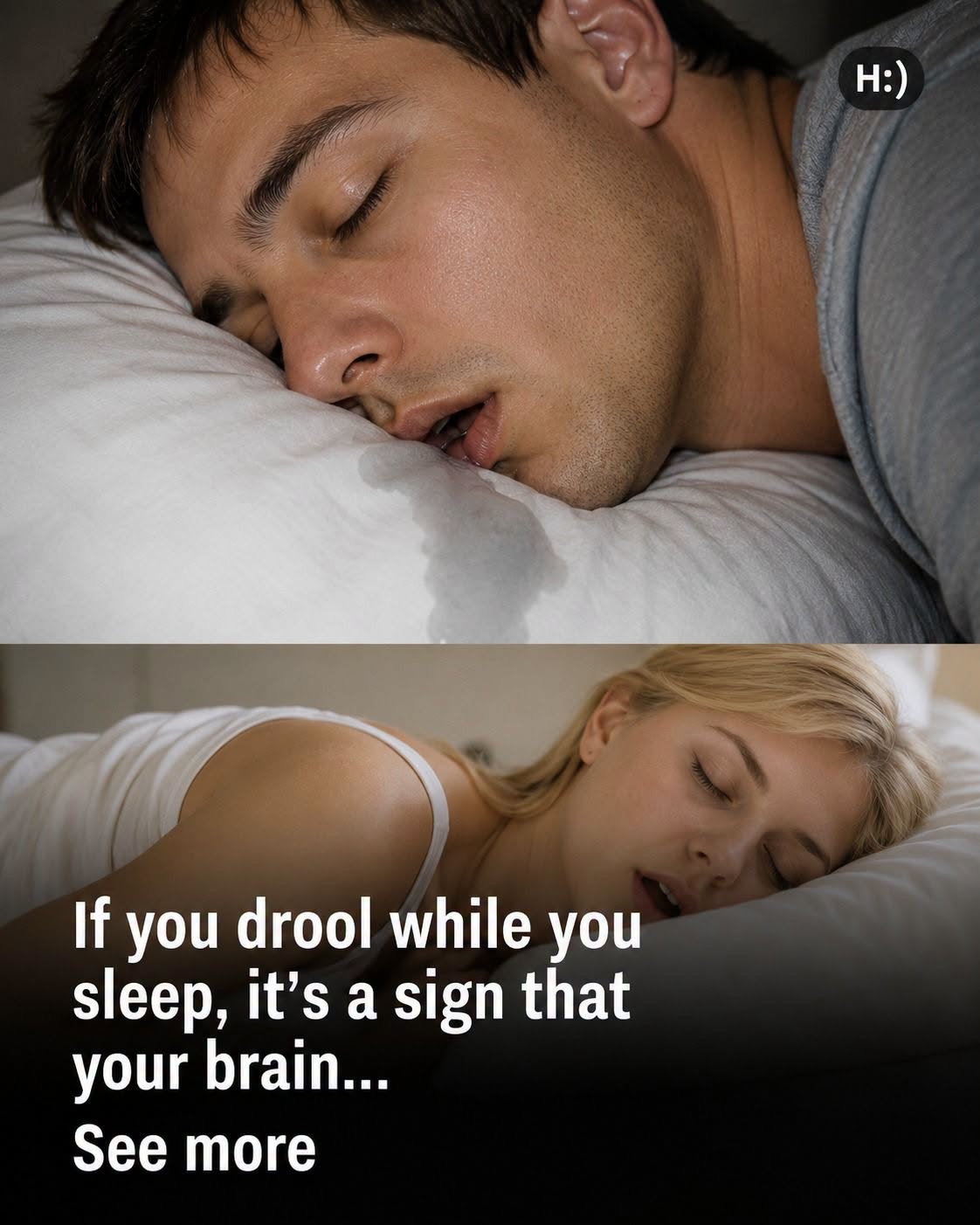
Waking up to find a wet pillow can be embarrassing, but drooling during sleep is extremely common and, by itself, usually does not mean that something is wrong with the brain. The image above shows a person sleeping with saliva on the pillow, accompanied by a message suggesting that nighttime drooling is a sign of something happening in the brain. That implication is misleading without additional context. Drooling during sleep can happen for many ordinary reasons, most of which are related to sleeping position, saliva production, mouth breathing, or difficulty keeping the lips closed while asleep.
Saliva is produced continuously, including during sleep. Normally, people swallow saliva automatically without waking up. During deeper sleep, however, swallowing becomes less frequent. If the mouth is open, saliva can collect and eventually escape onto the pillow. Sleeping on the side or stomach can make this more noticeable because gravity allows saliva to flow out of the mouth more easily.
One of the most common contributors is mouth breathing. When someone breathes primarily through the mouth during sleep, their lips may remain partially open, allowing saliva to escape. Nasal congestion from allergies, a cold, sinus problems, or a deviated nasal septum can encourage mouth breathing. Some people naturally breathe through their mouths during sleep even when they are otherwise healthy.
Sleeping position also matters. People who sleep on their sides or stomach may be more likely to notice drooling because the position of the head allows saliva to leave the mouth. Someone who sleeps on their back may be less likely to have visible drooling because saliva tends to remain inside the mouth and is more likely to be swallowed.
Certain medications can increase saliva production or alter swallowing. Some neurological conditions can also affect swallowing or the muscles responsible for controlling saliva. However, it is important not to jump from the observation of drooling to the conclusion that a neurological disease is present. Drooling alone is not a reliable indicator of a brain disorder.
Excessive saliva production, known as hypersalivation, can have several possible causes. Dental or oral problems, irritation inside the mouth, acid reflux, nausea, certain medications, and some infections can contribute. Pregnancy can also be associated with increased salivation in some people. In other cases, the amount of saliva being produced may be normal, but the person has difficulty swallowing it efficiently.
Sleep disorders deserve consideration when nighttime drooling occurs together with other symptoms. Obstructive sleep apnea, for example, can cause repeated interruptions in breathing during sleep. People with sleep apnea may snore loudly, gasp or choke during sleep, wake with a dry mouth or headache, experience excessive daytime sleepiness, or have witnessed pauses in breathing. Mouth breathing is common in people with obstructive sleep apnea, and this can contribute to saliva escaping from the mouth.
If drooling is accompanied by loud habitual snoring, choking or gasping during sleep, repeated nighttime awakenings, morning headaches, or significant daytime tiredness, it is worth discussing the symptoms with a healthcare professional. Sleep apnea is treatable, and identifying it can be important for overall health.
Neurological disorders can sometimes cause drooling, but usually the situation is more complicated than simply waking up with a wet pillow. Conditions that affect swallowing, facial muscle control, or the coordination of swallowing can allow saliva to accumulate. In such cases, there may be additional symptoms such as difficulty swallowing food or liquids, coughing while eating, changes in speech, facial weakness, tremors, or problems controlling movements.
A sudden change in drooling combined with neurological symptoms should receive prompt medical attention. For example, if a person suddenly develops facial drooping, weakness or numbness on one side of the body, difficulty speaking, severe confusion, loss of balance, or difficulty swallowing, emergency medical assessment is necessary because these can be signs of a serious neurological event. The drooling itself is not the diagnosis; it is the combination of symptoms and their sudden onset that makes the situation urgent.
For most people, occasional drooling during sleep is simply a normal variation. Children frequently drool while sleeping, and adults can do so as well. Stress, exhaustion, alcohol, sedating medications, nasal congestion, and changes in sleeping position can all influence whether someone wakes up with saliva on their pillow.
There are several practical steps that may reduce nighttime drooling. Treating nasal congestion can make nasal breathing easier. People with allergies may benefit from appropriate allergy management, while those with persistent nasal obstruction may need an evaluation by a healthcare professional. Maintaining good oral hygiene is also important because saliva and oral health are closely connected. If a person suspects that a medication is contributing, they should discuss it with their doctor rather than stopping the medication independently.
Changing sleeping position may help some people. Sleeping on the back can reduce saliva escaping from the mouth for certain individuals, although people with suspected sleep apnea should not assume that simply changing position is an adequate treatment. In some cases, positional changes can reduce symptoms, but persistent snoring or breathing interruptions still warrant professional assessment.
It is also useful to distinguish drooling during sleep from excessive daytime salivation. If someone frequently drools while awake, has difficulty swallowing saliva, repeatedly coughs or chokes while eating, or feels that saliva is constantly accumulating in the mouth, the underlying issue may be different and should be evaluated.
The claim in the image that drooling while sleeping is automatically a “sign” involving the brain is therefore too broad. There is no single explanation for nighttime drooling. The brain and nervous system do participate in controlling swallowing and saliva, but that does not mean that ordinary drooling indicates a brain problem.
The most useful question is not simply, “Do you drool while sleeping?” but rather, “What other symptoms are present, and has the pattern changed?” Occasional drooling in an otherwise healthy person is generally not alarming. Persistent or newly severe drooling accompanied by swallowing difficulties, neurological changes, breathing problems, or significant sleep symptoms deserves medical evaluation.
Ultimately, a wet pillow after sleeping is usually much less mysterious than social-media captions suggest. Sleeping position, an open mouth, nasal congestion, normal changes in swallowing during sleep, and increased saliva can all explain the phenomenon. While certain medical conditions can contribute to excessive drooling, the presence of drooling alone cannot establish a neurological problem. Paying attention to accompanying symptoms and seeking medical advice when the pattern is persistent, severe, or associated with other concerning changes is a much more reliable approach than interpreting the drooling itself as a warning sign from the brain.

