
Red Spots on a Toddler’s Hands and Feet: Could It Be Hand, Foot and Mouth Disease?
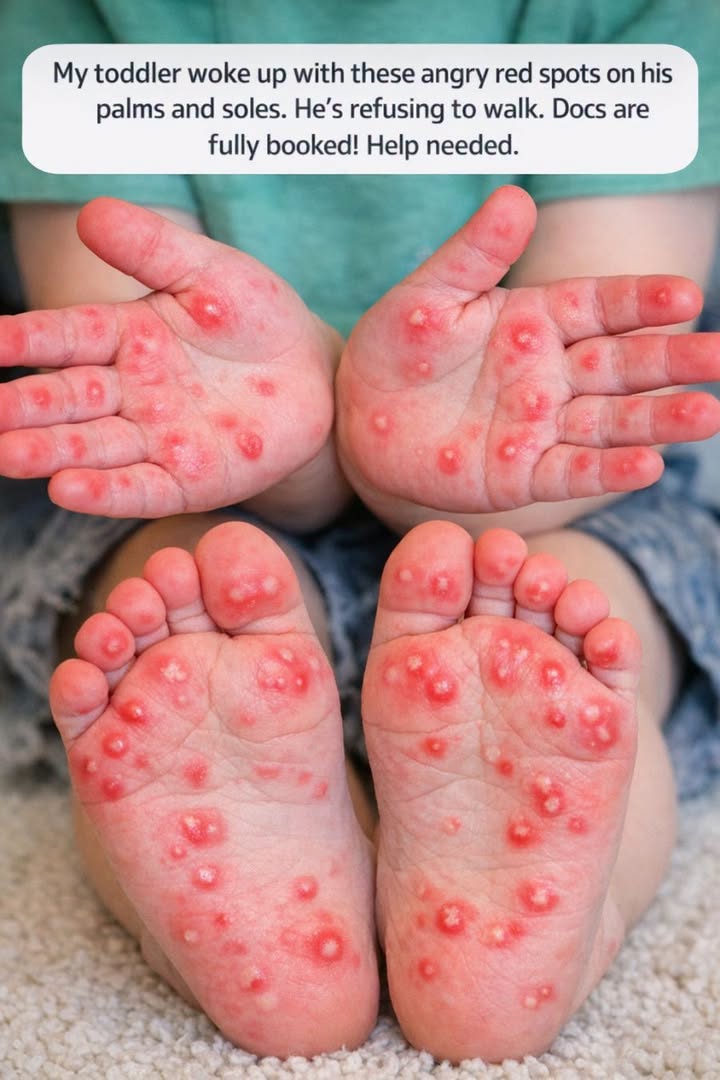
Seeing sudden red spots or painful bumps on a toddler’s hands and feet can be frightening, especially when the child refuses to walk. The picture shows numerous red, round spots and blister-like lesions on the palms and soles. This pattern can be seen with hand, foot and mouth disease (HFMD), a common viral infection in young children. However, a photograph alone cannot confirm the diagnosis, and other childhood illnesses can sometimes cause similar rashes.
If a toddler is refusing to walk because the soles are painful, it is important to pay attention to the child’s overall condition and arrange medical advice, particularly if the child is also feverish, not drinking, unusually sleepy, or getting worse.
What Is Hand, Foot and Mouth Disease?
Hand, foot and mouth disease is a contagious viral infection that commonly affects babies and young children, especially those under 5 years old. It is usually caused by enteroviruses, including coxsackieviruses.
The illness commonly causes fever, sore throat, reduced appetite, painful mouth sores, and a rash on the hands and feet. The rash can also appear around the buttocks, legs, and arms. According to the CDC, spots on the palms and soles are a common feature of HFMD. CDC
Most children recover without specific treatment within approximately 7 to 10 days.
The disease has nothing to do with the livestock disease called foot-and-mouth disease. They are completely different illnesses.
Why Are There Red Spots on the Palms and Soles?
One of the most recognizable features of HFMD is a rash involving the palms of the hands and soles of the feet.
The spots may begin as small red or pink areas. Some become slightly raised, and others can develop into small blisters. The surrounding skin may appear red or irritated.
In the image, the lesions appear particularly prominent on the palms and soles. This type of distribution can occur with HFMD, but parents should not assume that every rash on the hands and feet is automatically HFMD.
Other infections and skin conditions can produce similar-looking spots. A healthcare professional can consider the child’s age, fever, mouth symptoms, appearance of the rash, and other symptoms before making a diagnosis.
Why Might a Toddler Refuse to Walk?
A toddler with painful spots on the soles may not want to stand or walk because putting pressure on the affected areas hurts.
Imagine having several tender blisters on the bottom of your feet and then being asked to walk normally. A young child may simply refuse to put their feet on the floor.
This does not necessarily mean that something dangerous is happening, but a child who suddenly refuses to walk should not be ignored, particularly when there is a new rash or significant pain.
If the child is otherwise alert, drinking normally, breathing comfortably, and has no serious warning signs, contact a pediatrician or healthcare professional for advice. If the child appears very unwell or develops other concerning symptoms, urgent medical assessment is appropriate.
Check for Mouth Sores
The name “hand, foot and mouth disease” refers to the typical areas affected, including the mouth.
Look inside the child’s mouth if they will allow you to do so. HFMD can cause painful sores or small blisters in the mouth and throat. These can make eating and drinking uncomfortable.
A child who suddenly refuses food may still be able to drink. Fluids are especially important because painful mouth sores can cause children to drink less than usual.
The CDC and NHS both emphasize preventing dehydration because young children can become dehydrated when mouth pain makes drinking difficult. CDC
Common Symptoms to Watch For
HFMD can begin with symptoms that resemble an ordinary viral infection. A child may develop a fever, sore throat, reduced appetite, tiredness, or general irritability.
Afterward, mouth sores and a rash may appear.
Some children have only mild symptoms, while others can be quite uncomfortable. The rash may appear on the palms and soles and sometimes on the buttocks, legs, or arms. CDC
Not every child develops every symptom. Some children may have only a few spots, while others develop many lesions.
Step-by-Step Care at Home
If a healthcare professional believes the illness is HFMD and the child is otherwise stable, treatment is generally focused on comfort and hydration because there is no specific antibiotic that cures the viral infection.
Step 1: Encourage Fluids
Offer small amounts of fluid frequently rather than expecting the child to drink a large amount at once.
Cool water and other suitable fluids may be easier for a child with painful mouth sores. The NHS recommends cool fluids and advises avoiding acidic drinks such as fruit juice when mouth sores are painful. nhs.uk
Watch the child’s urination. A noticeable reduction in wet diapers or trips to the toilet can be a warning sign of dehydration.
Step 2: Offer Soft Foods
If the child wants to eat, offer soft foods that are easy to swallow.
Yogurt, soft foods, soup that has cooled, and other gentle foods may be easier than crunchy or spicy foods. Hot, salty, or spicy foods can irritate mouth sores. nhs.uk
Do not force a child to eat if they are not hungry. Keeping them hydrated is particularly important.
Step 3: Manage Pain and Fever Safely
Pain and fever can make toddlers especially miserable.
Age-appropriate paracetamol or ibuprofen may help with pain or fever when suitable for the child. Always follow the product instructions for the child’s age and weight, and ask a healthcare professional or pharmacist if you are unsure about the correct medicine or dose.
Never give aspirin to a child unless specifically directed by a healthcare professional. CDC
Step 4: Protect the Skin
Try not to pick, squeeze, or deliberately break the blisters.
Keep affected areas clean. If a blister breaks naturally, gently keep the area clean and monitor it for increasing redness, swelling, pus, or worsening pain.
Step 5: Allow the Feet to Rest
If walking hurts, allow the toddler to rest rather than forcing them to walk.
Soft socks or comfortable footwear may help once the child wants to move around, but if the child continues to refuse to stand or walk, medical advice should be obtained.
How Does HFMD Spread?
HFMD spreads easily from person to person. The virus can spread through respiratory secretions, stool, and fluid from blisters.
Good handwashing is one of the most important ways to reduce transmission. Wash hands carefully after changing diapers or helping a sick child use the toilet.
Do not share cups, spoons, towels, or other personal items. Clean frequently touched surfaces and wash soiled clothing and bedding.
The illness is particularly contagious among young children, which is why outbreaks can occur in nurseries and childcare settings. CDC
When Should Parents Seek Medical Help?
Most cases are mild, but parents should seek medical advice if they are worried about the child’s condition.
A child should receive prompt medical attention if they are unable to drink adequately, are urinating much less than usual, have signs of dehydration, have a very high or persistent fever, or appear to be getting worse. CDC
Emergency care is needed if a child has difficulty breathing, becomes difficult to wake, is confused, has a seizure, develops blue or unusually pale skin, or appears seriously ill. These are not symptoms to manage at home. nhs.uk
Because the child shown in the image is described as refusing to walk, that symptom deserves particular attention. Painful soles can explain reluctance to walk, but a healthcare professional should assess a child who suddenly cannot or will not walk, especially if there is significant pain, swelling, weakness, fever, or worsening symptoms.
How Long Does Hand, Foot and Mouth Disease Last?
HFMD usually improves within about 7 to 10 days. Most children recover completely with supportive care. CDC
The skin lesions gradually heal, and the child should slowly return to normal activity as the pain and other symptoms improve.
If symptoms are not improving after about 7 to 10 days, or if the child is becoming more unwell, medical evaluation is recommended. nhs.uk
Final Thoughts
Red spots and small blisters on a toddler’s palms and soles can certainly look alarming. The pattern shown in the image is compatible with hand, foot and mouth disease, particularly if the child also has fever, mouth sores, sore throat, or reduced appetite. However, an image cannot establish a diagnosis.
The most important things parents can do are monitor the child’s general condition, encourage fluids, provide suitable pain relief when appropriate, protect the skin, practice good hand hygiene, and watch carefully for dehydration or other warning signs.
Most children with HFMD recover within 7 to 10 days. Nevertheless, a toddler who is refusing to walk because of painful feet should receive appropriate medical advice, and any child who becomes very sleepy, has breathing difficulty, cannot drink, urinates much less than normal, has a seizure, or appears seriously ill should receive urgent medical care.

