
Tiny Flat Purple Dots on the Lower Legs: What Could They Mean?
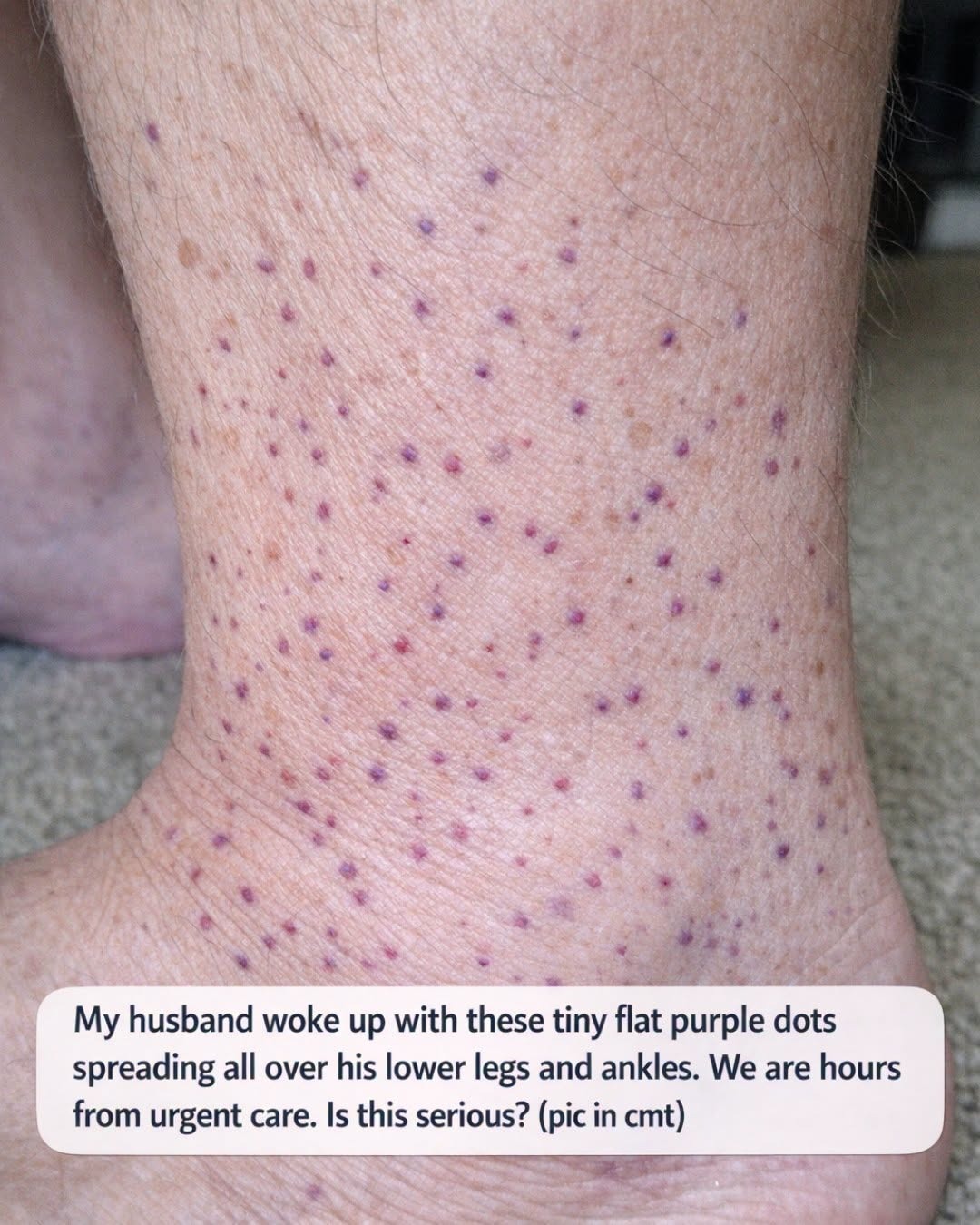
Tiny, flat purple or reddish spots appearing suddenly across the lower legs can be alarming, especially when they seem to develop within hours. The spots shown in the image resemble petechiae or small purpura, terms doctors use for tiny areas of bleeding underneath the skin. They are different from an ordinary rash because the color comes from blood that has leaked from small blood vessels rather than simply from inflammation at the skin’s surface.
One important feature of these spots is that they typically do not fade or turn white when pressed. This is called “non-blanching.” A non-blanching rash can have many causes, ranging from relatively minor problems to conditions that require urgent medical attention. The appearance alone cannot determine the cause, so sudden widespread spots should not simply be assumed to be harmless.
Petechiae can occur when tiny blood vessels called capillaries leak small amounts of blood. This may happen because of physical pressure or trauma, certain infections, medications, inflammation of blood vessels, or abnormalities involving platelets or blood clotting. Sometimes the spots are concentrated around the ankles and lower legs because gravity and pressure can contribute to blood-vessel leakage in these areas.
A particularly important possibility is a low platelet count, known medically as thrombocytopenia. Platelets help the body stop bleeding, and when their number becomes unusually low, small spontaneous areas of bleeding can appear under the skin. Some illnesses, medications, immune conditions, and infections can cause platelet levels to fall. A person with thrombocytopenia may also develop easy bruising, nosebleeds, bleeding from the gums, unusually heavy menstrual bleeding, or prolonged bleeding from minor injuries.
Another possibility is vasculitis, meaning inflammation of blood vessels. Certain forms of small-vessel vasculitis can produce clusters of red, purple, or brownish spots, particularly on the lower legs. Some forms can also cause swelling, joint discomfort, abdominal symptoms, or changes in urine. The spots associated with vasculitis may become raised or palpable rather than remaining completely flat, although photographs alone cannot reliably establish this distinction.
Infections can also cause petechiae or purpura. Some viral infections can produce relatively mild skin findings, while certain serious bacterial infections can cause rapidly developing non-blanching spots. The overall condition of the person is therefore extremely important. A person who has a new non-blanching rash together with fever, severe headache, confusion, unusual sleepiness, difficulty breathing, fainting, a rapidly worsening rash, severe weakness, or a generally very ill appearance needs urgent medical evaluation rather than waiting several hours for a routine appointment.
The speed at which the spots appeared is also relevant. A rash that develops suddenly over several hours deserves more attention than an unchanged collection of spots that has been present for months. Rapidly increasing numbers of purple spots can indicate an active process affecting blood vessels, platelets, or clotting. However, rapid appearance does not automatically mean that the underlying condition is dangerous; only an examination and, when appropriate, laboratory testing can determine this.
Medication history is another important part of the evaluation. Medicines that affect platelets or blood clotting can make bruising and small areas of bleeding more likely. Examples include aspirin, some anti-inflammatory medicines, anticoagulants, and certain other prescription drugs. New medications, recent dose changes, supplements, and recreational substances should all be reported to a healthcare professional. People should not stop prescribed blood-thinning medication on their own unless a clinician specifically advises them to do so.
Doctors evaluating this type of rash commonly examine the skin carefully and ask about recent infections, medications, illnesses, injuries, bleeding symptoms, and previous episodes. Blood tests may be used to check the complete blood count, platelet level, and blood-clotting function. Depending on the circumstances, additional tests may be needed to investigate infection, inflammation, autoimmune conditions, or other causes.
There are also benign explanations for some small red or purple spots. Minor trauma, scratching, pressure, intense exercise, prolonged coughing or vomiting, and other forms of physical strain can occasionally produce petechiae. Chronic skin conditions can also leave persistent red or brown marks. Nevertheless, a sudden eruption covering both lower legs without an obvious explanation is worth having assessed, particularly when the person has never experienced it before.
The image itself cannot establish whether the spots represent petechiae, purpura, a vascular skin condition, or another type of rash. Lighting, camera settings, skin tone, and the absence of information about symptoms make photographic diagnosis unreliable. A healthcare professional can press the lesions, examine whether they are raised, assess the distribution, look for bruising or bleeding elsewhere, and determine whether testing is necessary.
For someone several hours away from urgent care, the safest approach depends on symptoms rather than appearance alone. If the person feels well, has no fever or significant bleeding, and the spots are stable, contacting a healthcare professional promptly for advice and arranging an examination may be reasonable. If the spots are rapidly spreading or accompanied by fever, severe illness, confusion, fainting, breathing difficulty, significant bleeding, severe headache, or other concerning symptoms, emergency medical care should be sought immediately rather than waiting for urgent care to open.
Until the cause is known, it can be useful to photograph the affected areas in good lighting and note whether the spots are increasing, changing, or appearing elsewhere. A list of medications and recent illnesses can also help clinicians. Most importantly, sudden purple pinpoint spots should not automatically be dismissed as an ordinary rash. While there are harmless explanations, petechiae and purpura can sometimes be an early sign of a blood, vascular, infectious, or clotting problem. The combination of the rash’s appearance, how quickly it developed, and the person’s other symptoms determines how urgently it should be evaluated.

