
Can Garlic, Lemon, and Mint Water Really Support Healthy Blood Pressure?
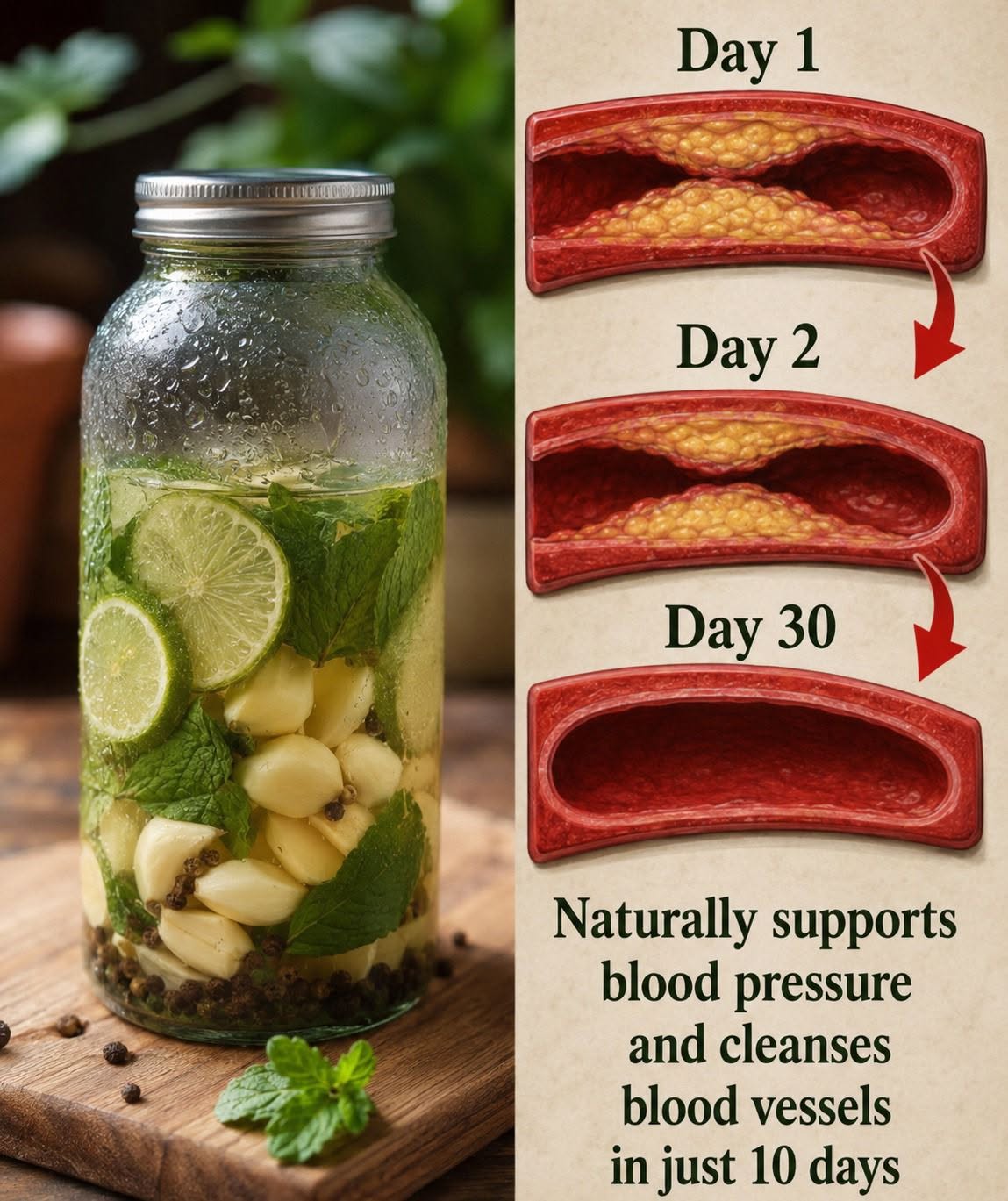
A glass jar filled with water, garlic cloves, lemon slices, fresh mint, and spices may look like a simple homemade wellness drink. Images promoting combinations like this often make dramatic claims, including that the drink can “clean” blood vessels, remove buildup from arteries, or significantly improve blood pressure within a few days. Such claims are appealing because they suggest that a natural, inexpensive drink can produce a major change in cardiovascular health.
The reality is more nuanced. Garlic and other ingredients in a drink like this can certainly be part of a healthy diet, but there is no good evidence that drinking garlic, lemon, and mint water can literally cleanse blood vessels or remove plaque from arteries in a matter of days. Blood vessels are living tissues, and conditions such as high blood pressure and atherosclerosis involve complex processes that cannot simply be reversed by one homemade drink.
Garlic itself has attracted considerable scientific interest. It contains compounds that have been studied for possible cardiovascular effects. According to the National Center for Complementary and Integrative Health, limited evidence suggests that garlic supplements may reduce blood pressure by a small amount in people who already have high blood pressure. However, the evidence is not strong enough to consider garlic a replacement for established medical treatment.
That distinction is important. Research on garlic preparations or supplements does not automatically prove that drinking water infused with raw garlic produces the same effect. Different preparations can contain different concentrations of active compounds, and the amount consumed in a homemade drink can vary considerably.
The other ingredients shown in the image can still have a place in a healthy eating pattern. Lemon provides flavor and vitamin C, while mint can make water more pleasant and refreshing. For someone trying to reduce sugary drinks, flavored water containing lemon and mint can be a useful alternative to soft drinks or heavily sweetened beverages. The benefit, however, comes largely from making a healthier beverage choice rather than from “detoxifying” the blood.
The idea of “cleansing” blood vessels is particularly misleading. The body already has sophisticated systems for processing and removing waste products through organs such as the liver and kidneys. Blood vessels do not need to be flushed with a special drink. When cholesterol-rich plaque develops inside arteries, it is associated with processes involving cholesterol, inflammation, blood pressure, smoking, diabetes, genetics, and other risk factors. Addressing those factors requires a broader approach.
High blood pressure is especially important because it can exist without obvious symptoms. The American Heart Association emphasizes that blood pressure should be measured and monitored rather than judged by how a person feels. Its current guidance also identifies lifestyle measures such as a heart-healthy eating pattern, reducing sodium, increasing physical activity, maintaining a healthy weight, and managing stress as important components of blood-pressure management.
One of the strongest dietary approaches for blood-pressure management is the DASH eating pattern, which stands for Dietary Approaches to Stop Hypertension. Rather than relying on a single ingredient, DASH emphasizes vegetables, fruits, whole grains, beans, nuts, seeds, low-fat dairy products, fish, poultry, and other nutrient-rich foods. It also encourages limiting sodium, saturated fat, sugary foods, and highly processed foods.
Research funded by the National Heart, Lung, and Blood Institute has found that following the DASH pattern can lower blood pressure, and reducing sodium can provide an additional benefit. In the DASH-Sodium study, participants experienced greater reductions in blood pressure when a DASH-style diet was combined with lower sodium intake.
This provides a useful lesson when evaluating viral health recipes. A food or drink does not have to be a miracle cure to be worthwhile. Garlic, lemon, and mint can be perfectly reasonable ingredients in a healthy diet. The problem begins when a simple recipe is presented as a substitute for medical treatment or as a guaranteed way to eliminate arterial disease.
For people concerned about blood pressure, reducing sodium is often much more meaningful than searching for a single “blood-cleansing” drink. The American Heart Association recommends no more than 2,300 milligrams of sodium per day, with an ideal limit of 1,500 milligrams for most adults, particularly those with high blood pressure. Much of the sodium people consume comes from packaged, prepared, and restaurant foods rather than from the salt shaker alone.
Replacing salty processed foods with vegetables, fruits, beans, whole grains, and other minimally processed foods can therefore make a meaningful difference. Drinking unsweetened lemon-and-mint water can complement those changes, especially if it replaces a sugary beverage, but it should not be viewed as the central treatment for hypertension.
There is also an important safety consideration involving garlic. Eating ordinary amounts of garlic as part of food is generally different from taking concentrated garlic supplements. NCCIH notes that garlic supplements may interact with certain medications and can increase bleeding risk, particularly for people taking anticoagulants. Anyone taking regular medication should therefore be cautious about assuming that “natural” automatically means risk-free.
The phrase “in just 10 days,” often included in images like this, deserves particular skepticism. Blood pressure can change over relatively short periods in response to factors such as sodium intake, stress, activity, sleep, medications, and measurement conditions. But a dramatic claim that a particular drink will cleanse arteries within a fixed number of days is not supported by the evidence cited by major health organizations.
A healthier way to approach the recipe is to treat it as flavored water rather than medicine. If you enjoy the taste, there is nothing inherently wrong with preparing water with lemon and mint and incorporating garlic into meals. The drink can be refreshing, low in calories, and useful for hydration. But its role should remain part of an overall healthy lifestyle.
For someone who has been diagnosed with hypertension, the most important step is to follow the treatment plan recommended by a qualified healthcare professional. Medication may be necessary for some people, and stopping prescribed medication in favor of a homemade remedy can be dangerous. NCCIH specifically advises people with high blood pressure to follow their healthcare provider’s treatment plan because controlling hypertension helps reduce the risk of serious complications.
The same principle applies to people worried about cholesterol or blocked arteries. A healthy diet, regular physical activity, avoiding tobacco, managing weight, controlling blood pressure and cholesterol, and taking prescribed medication when appropriate are much more meaningful strategies than relying on a detox drink.
Ultimately, the jar shown in the image represents an appealing idea: simple natural ingredients providing an easy route to better health. There is some scientific interest in garlic and cardiovascular health, but the evidence does not justify the dramatic promise that garlic, lemon, and mint water will cleanse blood vessels in ten days. Garlic may have modest effects on blood pressure in some circumstances, but those effects are not comparable to proven medical treatment.
The most useful takeaway is therefore simple: enjoy wholesome foods and drinks for what they genuinely offer, but be cautious when a recipe promises extraordinary medical results. Healthy blood vessels are supported not by a single cleansing drink, but by consistent habits practiced over time—balanced nutrition, lower sodium intake, regular movement, good sleep, avoidance of tobacco, appropriate medical care, and regular blood-pressure monitoring.

