
Table of Contents
ToggleSoft Homemade Poppy Seed Dinner Rolls Recipe
These soft homemade poppy seed dinner rolls are fluffy, buttery, golden, and perfect for breakfast, dinner, sandwiches, or holiday gatherings. The dough is enriched with milk, butter, and eggs, giving the rolls a tender texture and beautiful golden color. Poppy seeds add a mild nutty flavor and a delicate crunch throughout the dough and on top.
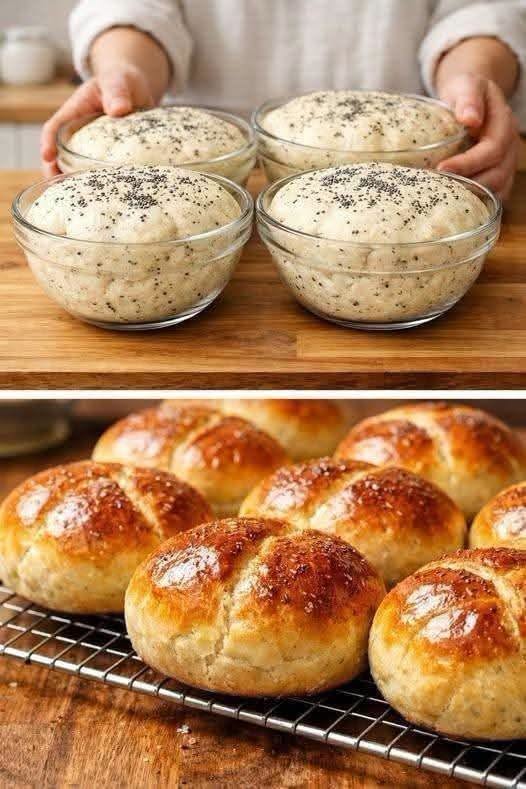
The image shows a soft enriched dough prepared in individual bowls before being shaped into rolls, followed by beautifully baked golden-brown buns. This recipe is designed to recreate that soft, glossy, homemade bakery-style texture using simple ingredients and an easy step-by-step method.
Ingredients
For the dough:
- 4 cups all-purpose flour
- 2 ¼ teaspoons active dry yeast
- ¼ cup granulated sugar
- 1 teaspoon salt
- 1 cup warm milk
- 2 large eggs
- 4 tablespoons unsalted butter, melted
- 2 tablespoons poppy seeds
- 1 teaspoon vanilla extract, optional
For the egg wash:
- 1 egg
- 1 tablespoon milk
For topping:
- 1–2 tablespoons poppy seeds
- 1 tablespoon melted butter, optional
Step 1: Prepare the Yeast
Begin by warming the milk. It should feel warm but not hot. Extremely hot milk can damage the yeast and prevent the dough from rising.
Pour the warm milk into a large mixing bowl. Add the sugar and active dry yeast. Stir gently and let the mixture sit for about 5–10 minutes.
When the yeast becomes slightly foamy on the surface, it is ready to use. This is a useful indication that the yeast is active.
If you are using instant yeast, you can mix it directly with the flour instead, although activating it first can still be helpful.
Step 2: Add the Wet Ingredients
Once the yeast mixture is ready, add the eggs and melted butter.
Add the vanilla extract if you want a slightly sweeter and more aromatic flavor.
Whisk the ingredients together until they are well combined.
The melted butter helps create soft and tender rolls, while the eggs add richness, structure, and a beautiful golden color.
Step 3: Combine the Dry Ingredients
In a separate bowl, combine the flour and salt.
Add the poppy seeds and mix them through the flour.
Gradually add the dry ingredients to the wet mixture.
Start stirring with a wooden spoon or sturdy spatula. As more flour is incorporated, the mixture will become thick and begin forming a dough.
Avoid adding all the flour at once because the exact amount needed can vary depending on the humidity, flour, and size of the eggs.
Step 4: Knead the Dough
Transfer the dough to a lightly floured work surface.
Knead it for approximately 8–10 minutes.
Push the dough forward with the heel of your hand, fold it back toward yourself, turn it slightly, and repeat.
At first, the dough may feel sticky, but it should gradually become smoother and more elastic.
Add only a small amount of extra flour if necessary. Too much flour can make the finished rolls heavy instead of soft and fluffy.
The finished dough should feel soft and slightly tacky but should not stick excessively to your hands.
Step 5: First Rise
Place the kneaded dough into a lightly greased bowl.
Turn it once so the surface is lightly coated with oil or butter.
Cover the bowl with plastic wrap or a clean kitchen towel.
Place it somewhere warm and allow the dough to rise for approximately 1–1½ hours, or until it has nearly doubled in size.
The rising time depends on the temperature of your kitchen. A warmer environment will generally allow the dough to rise faster.
Step 6: Check the Dough
When the dough has doubled in size, gently press one finger into it.
If the indentation remains and the dough slowly springs back, it is ready for shaping.
Do not aggressively punch the dough down. Instead, gently press out the excess air.
This preserves some of the structure created during fermentation while making the dough easier to shape.
Step 7: Divide the Dough
Transfer the dough to your work surface.
Divide it into approximately 12 equal pieces.
For larger dinner rolls, divide the dough into 10 pieces. For smaller party rolls, you can make 14–16 pieces.
Try to make the portions as equal as possible so that they bake evenly.
A kitchen scale can be helpful if you want perfectly uniform rolls.
Step 8: Shape the Rolls
Take one piece of dough and gently flatten it.
Pull the edges toward the center, then turn the dough over and roll it gently between your hands to create a smooth ball.
Place the shaped dough on a parchment-lined baking sheet.
Repeat with the remaining pieces.
Leave a little space between each roll because they will expand during the second rise and while baking.
Step 9: Second Rise
Cover the shaped rolls loosely with a clean kitchen towel.
Let them rise for another 30–45 minutes.
They should become visibly puffier and softer.
This second rise is important because it helps create the light, airy interior shown in the finished rolls.
Do not skip this step if you want soft bakery-style dinner rolls.
Step 10: Prepare the Egg Wash
While the rolls are rising, prepare the egg wash.
Whisk one egg with one tablespoon of milk.
The egg wash gives the rolls their shiny, golden-brown surface.
Once the rolls have finished their second rise, gently brush the tops with the egg wash.
Be careful not to press down on the dough while brushing.
Step 11: Add the Poppy Seeds
Sprinkle additional poppy seeds over the tops of the rolls.
You can use a light coating or add more depending on your preference.
The poppy seeds provide a beautiful appearance and a subtle nutty flavor.
If you prefer sesame seeds, you can substitute them or combine sesame and poppy seeds for a mixed-seed topping.
Step 12: Bake the Rolls
Preheat your oven to 375°F (190°C).
Place the baking tray in the center of the oven.
Bake the rolls for approximately 18–25 minutes, depending on their size.
They should become puffed and beautifully golden brown on top.
The bottoms should also be lightly browned.
Avoid overbaking because this can cause the rolls to lose some of their softness.
Step 13: Add Butter After Baking
Remove the rolls from the oven.
While they are still hot, lightly brush the tops with melted butter.
This optional step gives the rolls an extra-soft crust and a rich buttery flavor.
Allow them to cool for at least 10–15 minutes before serving.
Although they smell irresistible straight from the oven, allowing them to cool slightly helps the interior finish setting.
Tips for Making Soft Homemade Dinner Rolls
The most important factor in making fluffy dinner rolls is controlling the amount of flour. Adding too much flour is one of the most common reasons homemade bread becomes dense.
Your dough should be soft and slightly tacky rather than stiff.
Another important factor is yeast activity. Always check that your yeast is fresh. If the yeast mixture does not become active when using active dry yeast, your dough may not rise properly.
Milk should be warm rather than hot. Extremely hot liquid can damage yeast.
Proper kneading also matters. Kneading develops gluten, which gives the dough the structure it needs to hold air during fermentation.
Give the dough enough time to rise. Do not rely only on the clock. The dough should look noticeably larger and feel light and airy.
How to Make Extra-Fluffy Rolls
For exceptionally soft rolls, use whole milk rather than water.
You can also replace some of the melted butter with softened butter during kneading.
Another useful technique is to avoid adding unnecessary flour during shaping. A soft dough produces softer bread.
After baking, brushing the rolls with melted butter helps keep the crust tender.
If you are preparing the rolls for a special occasion, you can also bake them close together in a baking dish. As they rise and bake, the sides will remain soft while the tops become golden.
How to Store Homemade Poppy Seed Rolls
Once completely cooled, store the rolls in an airtight container or resealable bag.
They can remain at room temperature for approximately 2–3 days.
For longer storage, freeze the rolls in a freezer-safe container or bag.
To serve frozen rolls, allow them to thaw at room temperature and then warm them in a low oven for several minutes.
You can also freeze the shaped dough before baking, although this requires additional preparation and careful thawing.
Serving Suggestions
These homemade poppy seed dinner rolls are incredibly versatile.
Serve them warm with butter, honey, jam, or cream cheese for breakfast.
For dinner, serve them alongside roasted chicken, beef, soup, pasta, vegetables, or a holiday meal.
They can also be sliced horizontally and used for sandwiches.
For a sweeter variation, add a little extra sugar and vanilla to the dough and serve the baked rolls with fruit preserves.
Frequently Asked Questions
Can I use instant yeast?
Yes. Instant yeast works very well in this recipe. It can be mixed directly with the flour, although you can also activate it in warm milk if you prefer.
Why are my rolls dense?
Dense rolls are usually caused by too much flour, insufficient kneading, inactive yeast, or not allowing enough time for the dough to rise.
Can I make these rolls without poppy seeds?
Absolutely. Simply leave them out. You can replace them with sesame seeds, sunflower seeds, or leave the rolls plain.
Can I prepare the dough the night before?
Yes. Prepare and knead the dough, then cover it tightly and refrigerate it overnight. Allow it to warm slightly before shaping, then let the shaped rolls complete their second rise before baking.
How do I know when the rolls are done?
The tops should be golden brown and the rolls should feel light and fully risen. If you have an instant-read thermometer, the center of the bread should generally be around 190–200°F (88–93°C).
Final Thoughts
These soft homemade poppy seed dinner rolls are an excellent recipe for anyone who wants fresh, fluffy bread with a beautiful golden crust. The combination of warm milk, eggs, butter, yeast, and poppy seeds creates tender rolls that are flavorful enough to enjoy on their own but versatile enough to serve with almost any meal.
The secret is simple: use fresh yeast, keep the dough soft, knead it properly, allow enough time for both rises, and avoid overbaking. Following these steps will give you beautifully golden rolls with a soft, fluffy center and a delicious buttery finish.
SEO Title: Soft Homemade Poppy Seed Dinner Rolls Recipe
Meta Description: Learn how to make soft and fluffy homemade poppy seed dinner rolls with this easy step-by-step recipe. These golden, buttery yeast rolls are perfect for breakfast, dinner, holidays, and sandwiches.

